
Last updated October 15, 2026
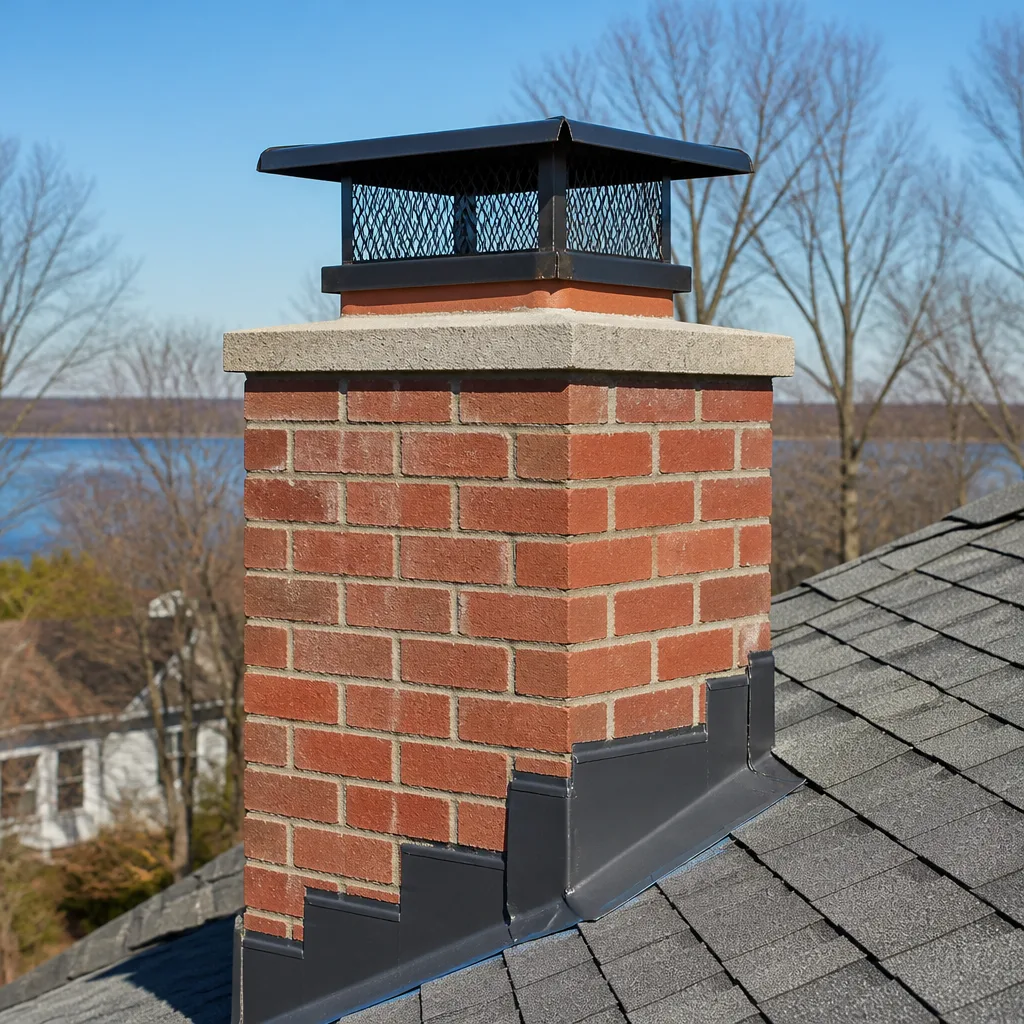 Sweep & inspection
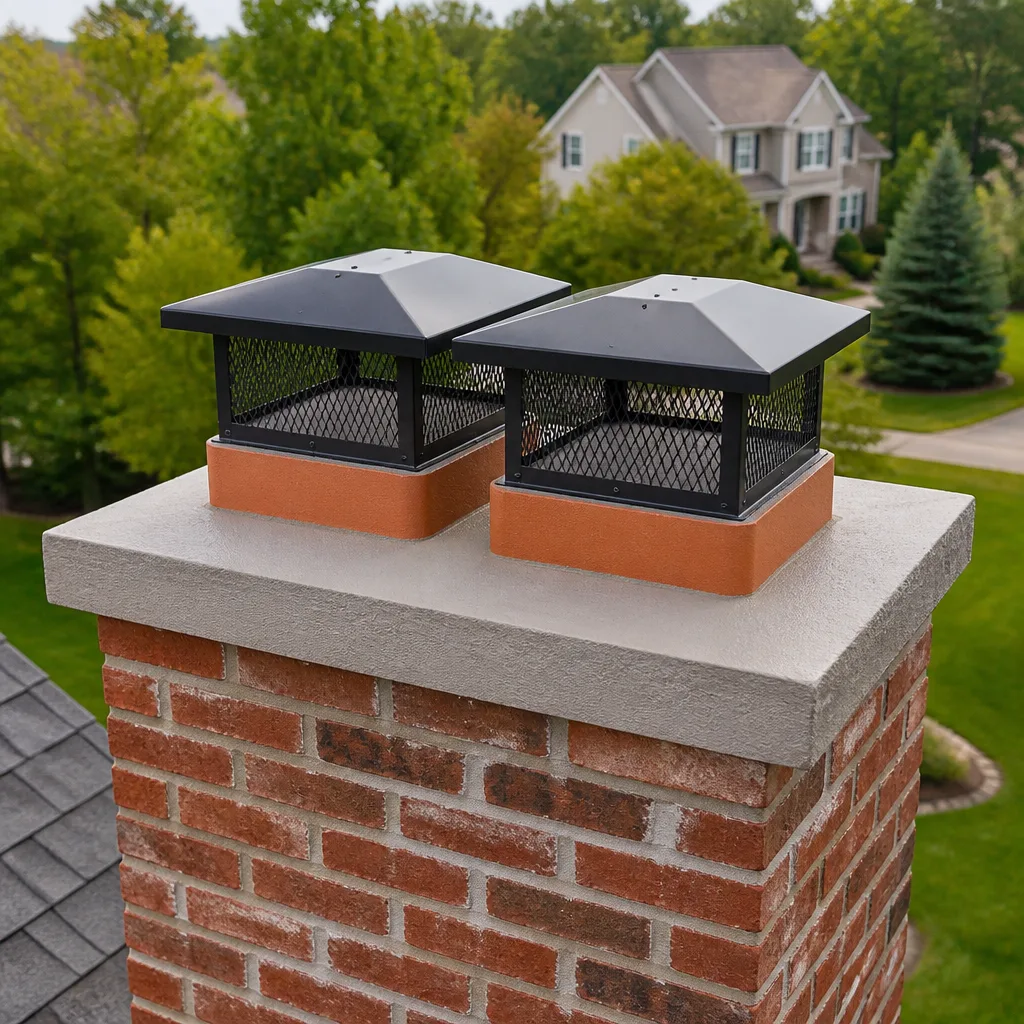 Caps & crowns
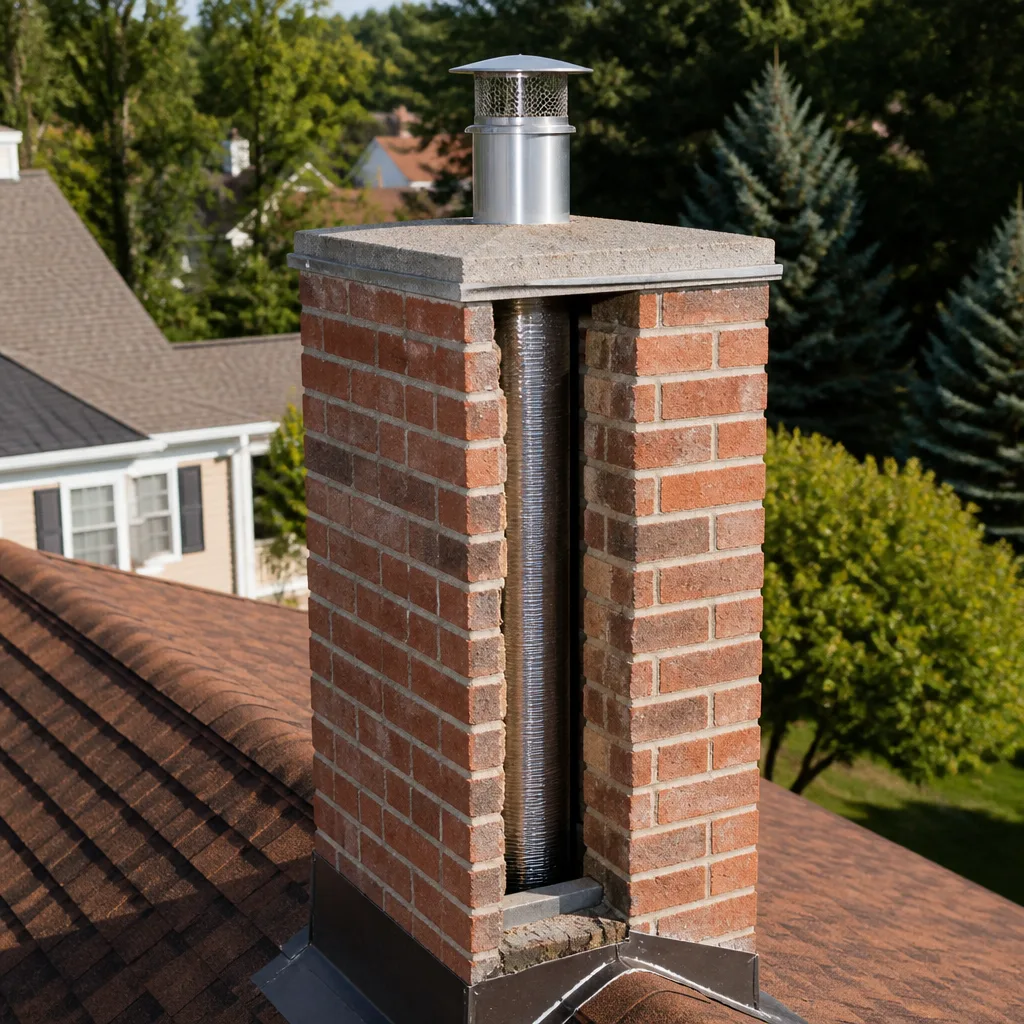 Flue relining
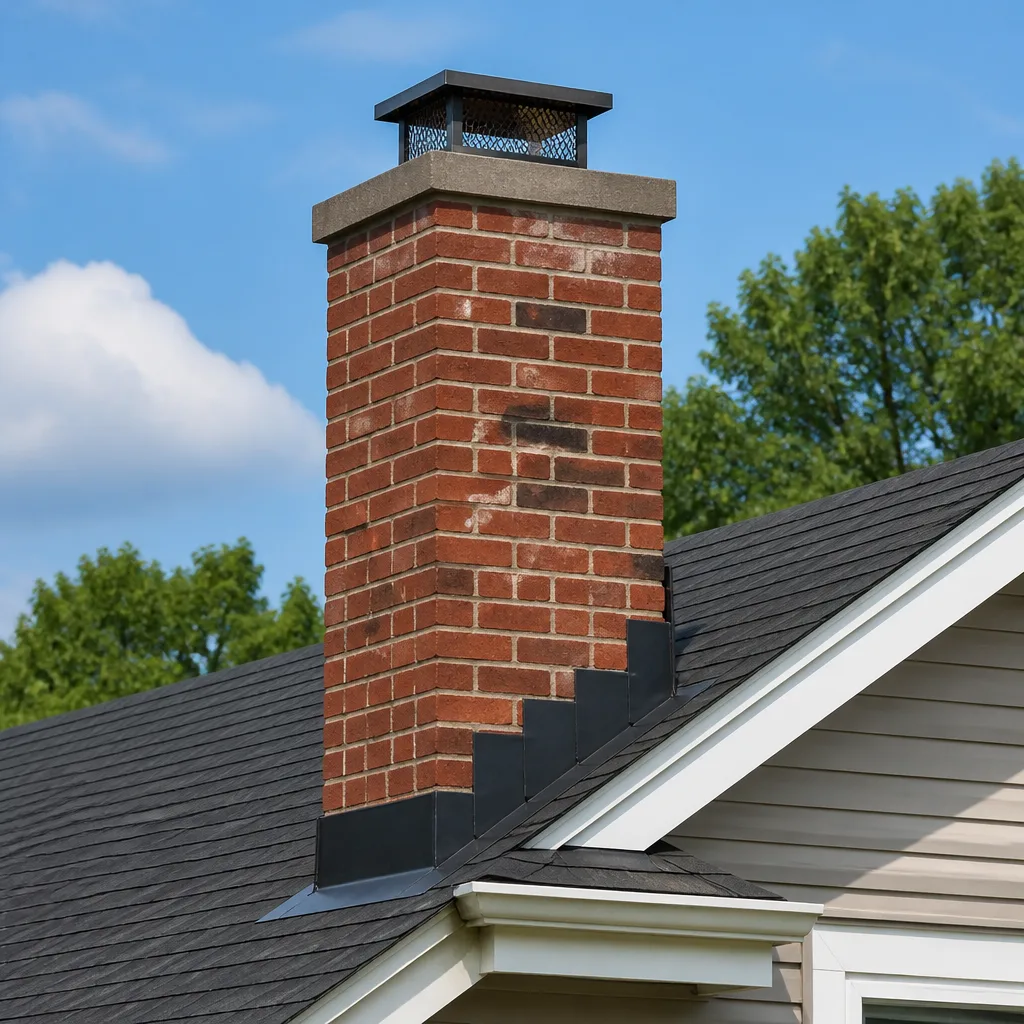 Masonry repair
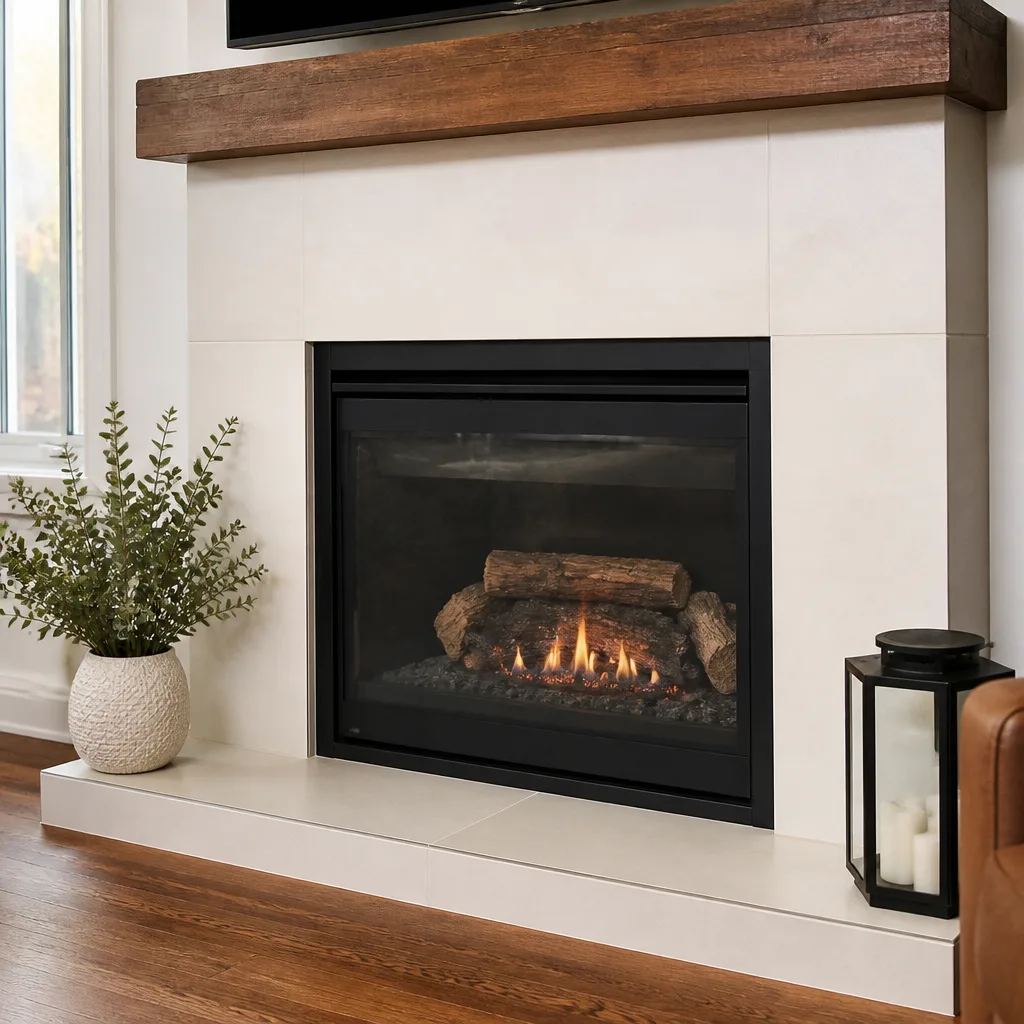 Gas fireplace service
Level 1 sweep and inspection to the NFPA 211 annual standard - flue, crown, cap, and flashing checked and photographed
Chimney sweep logs do not sweep chimneys. They loosen some creosote - which then falls where a brush and vacuum still have to collect it.
Chimney Cleaning Permits, Codes & Inspections in CA: What You Need to Know
A chimney sweep doesn’t need a permit to clean your flue. But here’s the part most Torrance homeowners never hear until it’s too late: if that sweep finds a cracked flue liner and replaces it without pulling a permit, that unpermitted repair can legally require you to disclose it as a defect when you sell your home. This guide walks through exactly which chimney services are permit-exempt, which trigger California building code requirements, how Torrance and LA County handle inspections, and what to ask before anyone climbs on your roof. For more guides & resources, visit our blog.
Quick Answer
Chimney cleaning and routine inspections do not require a permit anywhere in California. However, structural repairs like flue liner replacement, firebox rebuilds, or new chimney construction do require permits through your local building department, and unpermitted repairs can create disclosure problems and insurance complications when you sell a home in Torrance. See our Chimney Cleaning Warning Signs: A Torrance Homeowner’s Reference Guide for related warning signs.
Styles & brands we work with
Table of Contents
- Which Chimney Services Are Permit-Exempt in California
- Which Chimney Repairs Require a Permit
- How Torrance and LA County Building Codes Apply
- What NFPA 211 Means for California Chimney Safety
- Level 2 Inspections and Real Estate Transactions
- How to Verify a Permit for Chimney Work
- What Chimney Work Costs in Torrance
- Common Mistakes to Avoid
Which Chimney Services Are Permit-Exempt in California
Chimney sweeping, creosote removal, and standard visual inspections fall under routine maintenance, not construction. California building codes draw a clear line: maintenance work that doesn’t alter the structure, the fire safety system, or the gas appliance venting doesn’t require a permit. A sweep uses brushes, rods, and vacuums to remove creosote (the flammable tar-like residue that builds up from burning wood) and soot from the flue walls. No structural change occurs. No permit needed.
The same applies to what chimney techs call a Level 1 inspection. A Level 1 inspection covers all readily accessible portions of the chimney, the firebox, and the exterior cap, and it typically happens during a routine sweep. We do these daily in Torrance without pulling a single permit because the work is observational. No one is altering anything.
Here’s the list of services that are permit-exempt in California:
- Chimney sweeping and creosote removal – brushing and vacuuming the flue interior
- Level 1 visual inspections – checking accessible portions of the chimney and firebox
- Chimney cap replacement – swapping a damaged cap for a new one when the flue tile itself isn’t modified
- Simple flashing repair – resealing the metal where the chimney meets the roof, when the masonry stays intact
- Crown coating or sealing – applying a waterproof sealant to the masonry crown
- Smoke shelf cleaning – removing debris from the ledge inside the throat of the chimney
In our experience, most Torrance homeowners need one of these services, not a permit-heavy repair. A proper sweep from Chimney Sweep in Torrance keeps the system safe and the maintenance record clean. Simple upkeep rarely crosses into permit territory.
Which Chimney Repairs Require a Permit
Permit requirements start the moment the work changes how your chimney performs or how it’s built. California’s building codes classify these as structural or mechanical alterations, and they come with specific permit obligations.
The most common permit-triggering repair we see in Torrance is flue liner replacement. A cracked or deteriorated clay tile liner needs either a stainless steel liner installed inside the old flue or a full removal and rebuild of the tile stack. Either way, the work alters the venting path for combustion gases. In California, that’s a mechanical permit through the building department.
Firebox rebuilds fall into the same category. The firebox is the brick or refractory panel chamber where the fire actually burns. Rebuilding it changes the fire safety assembly, and local inspectors want to verify the clearances and materials meet current code before the fireplace goes back into use.
Here’s the full permit-required list:
- Flue liner installation or replacement – including stainless steel liners like DuraFlex or HeatShield ceramic resurfacing
- Firebox rebuild or refractory panel replacement – changing the combustion chamber structure
- New chimney construction – building a chimney for a new house, addition, or fireplace
- Chimney teardown or partial demolition – removing a section of masonry above the roofline
- Changing a fireplace from one fuel type to another – converting wood-burning to gas logs can trigger permit review depending on the venting changes
- Major masonry repair that compromises the flue integrity – rebuilding a collapsed flue crown that extends into the tile liner
One nuance many Torrance homeowners miss: a permit isn’t just about paperwork. When a repair is permitted, the city inspector verifies the work meets fire code clearances and venting standards. When it’s not, the homeowner assumes all liability if the chimney fails. We’ve seen unpermitted liner installs in South Torrance where the liner wasn’t properly insulated, and the homeowner had no recourse because no permit record existed.
How Torrance and LA County Building Codes Apply
Torrance operates under the California Building Standards Code (Title 24), which incorporates the International Residential Code with state-specific amendments. The City of Torrance Building Department enforces these codes locally, and they apply to any chimney work beyond routine maintenance. LA County has its own building divisions for unincorporated areas, but homes within Torrance city limits fall under Torrance’s jurisdiction.
The key detail for chimney work: only a licensed contractor can pull a permit. In California, that means a C-61/D-34 Limited Specialty license for chimney and fireplace work, or a C-36 plumbing and heating contractor when the work involves gas appliance venting, or a B General Building contractor for larger structural projects. A handyman without a contractor’s license cannot legally pull a permit, and a company that suggests you pull the permit yourself as the owner-builder should raise a flag. The owner-builder path exists in California, but when you sign that affidavit, you take on legal responsibility for the work and the liability if something goes wrong.
Torrance-specific nuances matter here. Many neighborhoods in Torrance, from Seaside Ranchos to the Hillside Overlay areas, have homes built between the 1950s and 1980s with original clay tile liners. Those liners are now 40 to 70 years old, and clay tile liners crack over time from thermal stress, moisture, and earthquakes. When we inspect a chimney in Hadley Chimney Torrance home service area, we document liner condition with a camera, and that documentation matters if a permit is needed because the inspector will want to see what the existing conditions are before approving the repair scope.
One more Torrance-specific consideration: the city’s proximity to the coast means salt air accelerates chimney cap and flashing corrosion. A corroded cap that’s still functioning can be swapped without a permit, but a corroded cap that’s leaked water into the flue and caused liner damage now puts you into permit territory for the liner repair. The initial small issue cascades into a bigger one.
What NFPA 211 Means for California Chimney Safety
NFPA 211 is the National Fire Protection Association standard for chimneys, fireplaces, vents, and solid fuel-burning appliances. It’s not a law in itself, but California references it as the benchmark for chimney safety. Building inspectors cite NFPA 211 clearances when reviewing chimney permits. Insurance adjusters use it to evaluate fire damage claims. Home inspectors flag chimneys that don’t meet it.
Here’s what NFPA 211 establishes that affects Torrance homeowners:
- Minimum clearance to combustibles – for masonry chimneys, combustible framing must stay at least 2 inches away from the exterior masonry surface
- Liner requirements – all masonry chimneys must have a clay tile liner or a listed metal liner system
- Inspection frequency – chimneys serving solid fuel appliances should be inspected at least once per year
- Structural integrity standards – the standard defines when a liner is considered deteriorated to the point of replacement
The “once per year” recommendation is the one most California homeowners know about, but the liner requirement is the one that matters more. If your chimney was built after 1940 and serves a fireplace or wood stove, it should have a liner. Homes in older Torrance neighborhoods like downtown or the tract housing off Sepulveda sometimes have unlined chimneys or liners that have cracked beyond repair. NFPA 211 makes those chimneys a code violation that can block a home sale or a refinance appraisal.
Level 2 Inspections and Real Estate Transactions
A Level 2 inspection is more thorough than a Level 1 and specifically covers areas that are harder to reach. In California real estate transactions, a Level 2 inspection often happens when a home inspector flags a chimney concern, when the property is changing hands, or after a seismic event, a chimney fire, or a lightning strike. The inspection includes a camera scan of the flue interior, an evaluation of all accessible portions of the exterior and interior including attics and crawlspaces, and clearance checks against NFPA 211.
Here’s the sequence that happens in a Torrance home sale:
- The buyer’s home inspector looks at the chimney and flags anything unusual – cracked crown, missing cap, staining, spalling brick
- The lender or the buyer requests a Level 2 inspection to verify the flue and firebox condition
- The chimney technician runs a camera through the flue and documents every crack, gap, and creosote accumulation
- The report goes to the buyer, the seller, and both agents
- If repairs are required, the buyer typically negotiates the cost into the sale price or requests the seller to complete repairs before closing
What the Level 2 report says matters. A clean report moves the transaction forward. A report showing a cracked liner with creosote buildup behind the crack triggers a repair negotiation. In a competitive Torrance market where homes off Crenshaw Boulevard sell in days, a chimney repair contingency can slow closing or sink a deal. We’ve worked with both buyers and sellers in these situations, and the homeowners who already have a recent Level 2 report in hand close faster with fewer surprises.
Mortgage lenders in California increasingly require Level 2 chimney documentation for FHA and VA loans when the appraisal notes a fireplace. Conventional lenders typically follow the appraiser’s lead. If the appraiser flags the chimney as a safety concern, the lender conditions the loan on a repair with proof of completion, and sometimes with proof of a permit for that repair. That’s where the permit discussion comes full circle: a permitted repair with an inspector’s sign-off satisfies the lender, while an unpermitted patch job doesn’t.
How to Verify a Permit for Chimney Work
Verifying a chimney permit in Torrance takes ten minutes and it’s worth doing before you hire anyone for a repair. The City of Torrance Building and Safety Division maintains permit records through their online portal. LA County has a separate portal for unincorporated areas.
Here’s the step-by-step for Torrance homeowners:
- Go to the City of Torrance Building and Safety Division permit portal, accessible from the city’s main website
- Search by property address – that pulls up every permit ever issued for that parcel
- Look for permits matching the chimney work: mechanical permits for liner replacement, building permits for structural masonry, or combination permits covering multiple scopes
- If a contractor claims a permit was pulled, ask for the permit number and verify it matches the portal record
- If your home had chimney work done before you bought it and you’re unsure whether it was permitted, request the full permit history for the address
One thing to know: in California, the permit is tied to the property, not to the person who pulled it. A permit stays on record for the life of the building. When you sell your Torrance home, the buyer’s agent will pull the permit history as part of due diligence, and any unpermitted work becomes a disclosure item. That’s exactly why we tell every customer the same thing: if the repair needed a permit, we’ll tell you before we touch anything, and we won’t do the work unpermitted.
You can also request a copy of any permit directly from the city’s records division. There’s a small fee for printed copies, but the portal access itself is free. If a contractor tells you the permit “isn’t necessary” for a liner replacement, verify that against the city’s own guidelines. The building department will give you a straight answer in one phone call.
What Chimney Work Costs in Torrance
Chimney work in Torrance runs a wide range depending on the service. The goal here is to give you realistic numbers so you can spot a fair price from a padded one and know what to expect before you call.
- Standard chimney sweep: $200 – $350 in Torrance, depending on flue height and creosote volume
- Level 1 inspection (standalone): $150 – $250
- Level 2 inspection with camera scan: $350 – $600
- Chimney cap replacement: $200 – $500 including parts and labor
- Stainless steel liner (DuraFlex or similar): $2,500 – $5,000, permit fees not included
- HeatShield ceramic liner resurfacing: $2,000 – $4,000 depending on flue length
- Firebox rebuild: $2,500 – $7,000 depending on firebox size and material
- Flashing repair: $300 – $800
- Crown seal or repair: $400 – $1,200
Permit fees in Torrance add a few hundred dollars on top of the repair itself, depending on the work valuation. The cost is small compared to the liability it removes. Our pricing model matches the Hadley way: a written price before any work starts, a written guarantee on every repair, and a free second visit if a repair fails within 365 days. No surprises at the door.
For gas fireplace work in Torrance, Gas Fireplace Repair in Torrance gets into the details of costs and services, and the same no-surprise pricing approach applies there too.
Common Mistakes to Avoid
- Assuming every chimney company has the right license. A C-61/D-34 license is specific to chimney work. Ask for the license number and check it against the Contractors State License Board database before you sign anything.
- Patching a cracked liner instead of replacing it. A patch does nothing for flue performance, and it doesn’t meet code. You’re paying for a temporary cover on a permanent problem.
- Skipping the camera inspection on a repair quote. Without camera footage, you’re trusting someone’s word about flue condition. With camera footage, you can see the crack yourself, and that transparency is what a reputable company will offer every time.
- Living with an unpermitted liner from a previous owner. It’s a disclosure liability sitting in your walls. When you sell, you’ll either pay to fix it properly or disclose it to the buyer, and both options cost more now than they would have at the time of the original repair.
- Waiting to sweep until the winter rush. Torrance doesn’t get snow, but we get the seasonal wind shift that pushes homeowners to use their fireplaces for the first time in November. The wait times for sweeps and inspections jump in October, and the chimney companies are booked solid.
- Ignoring a spalling brick or a hairline crack in the crown. Water intrusion is slow, but it compounds. What’s a $200 crown seal this year becomes a $3,000 liner replacement in three years.
- Hiring a handyman to “look at” a chimney. A visual once-over from a general handyman doesn’t replace a Level 1 or Level 2 inspection from a trained chimney technician with a camera. Handymen can’t legally pull permits for chimney work either.
For repair-specific guidance, Chimney Repair in Torrance covers the most common repairs we handle and what they cost. If your fireplace burns gas instead of wood, the permit landscape changes slightly, and Gas Fireplace Repair in Torrance walks through those details.
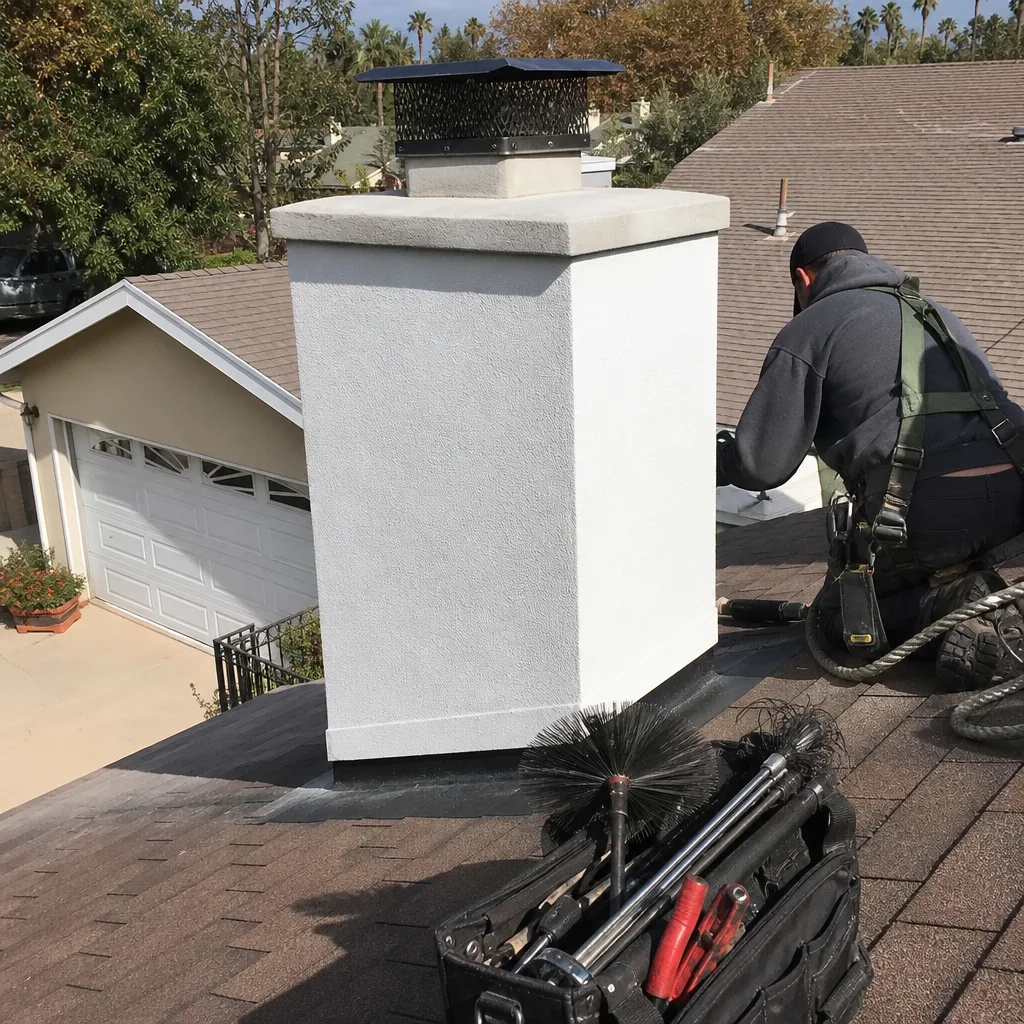
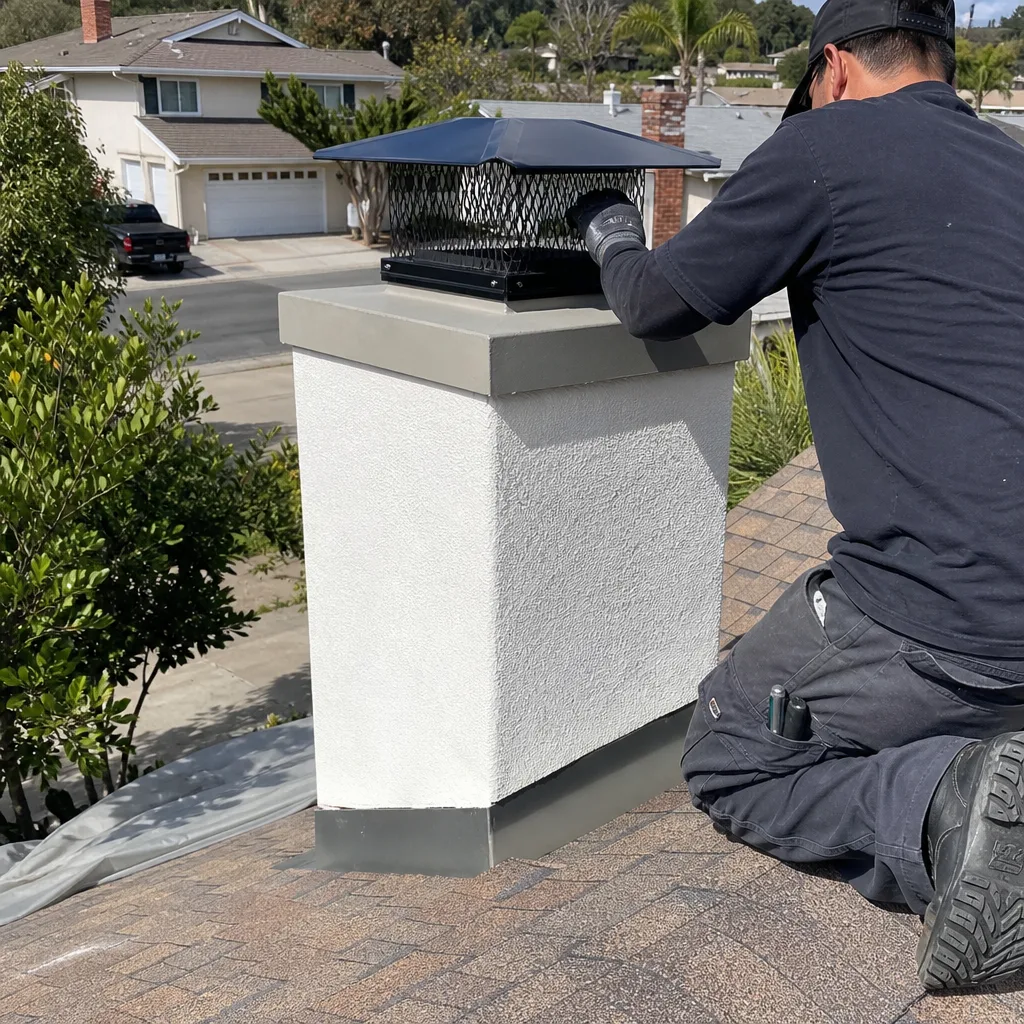
See the difference
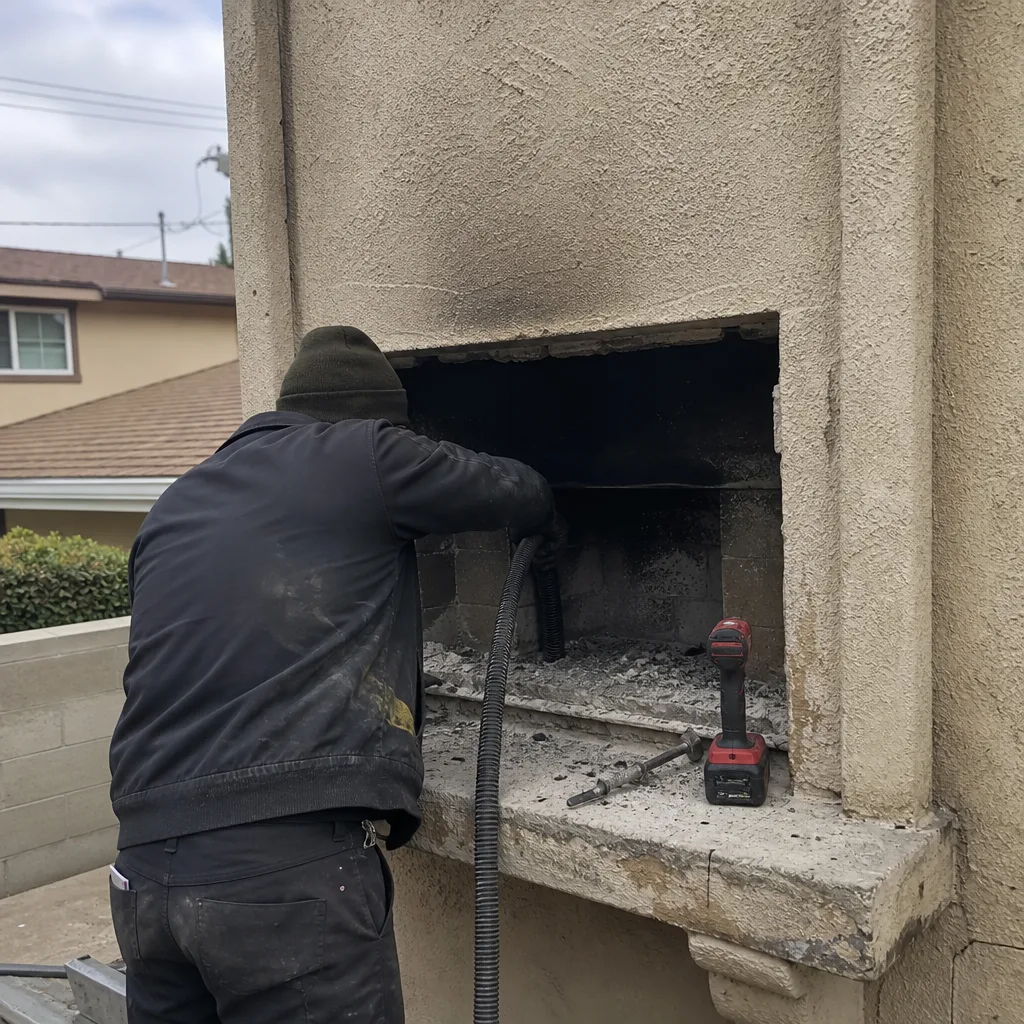 Before
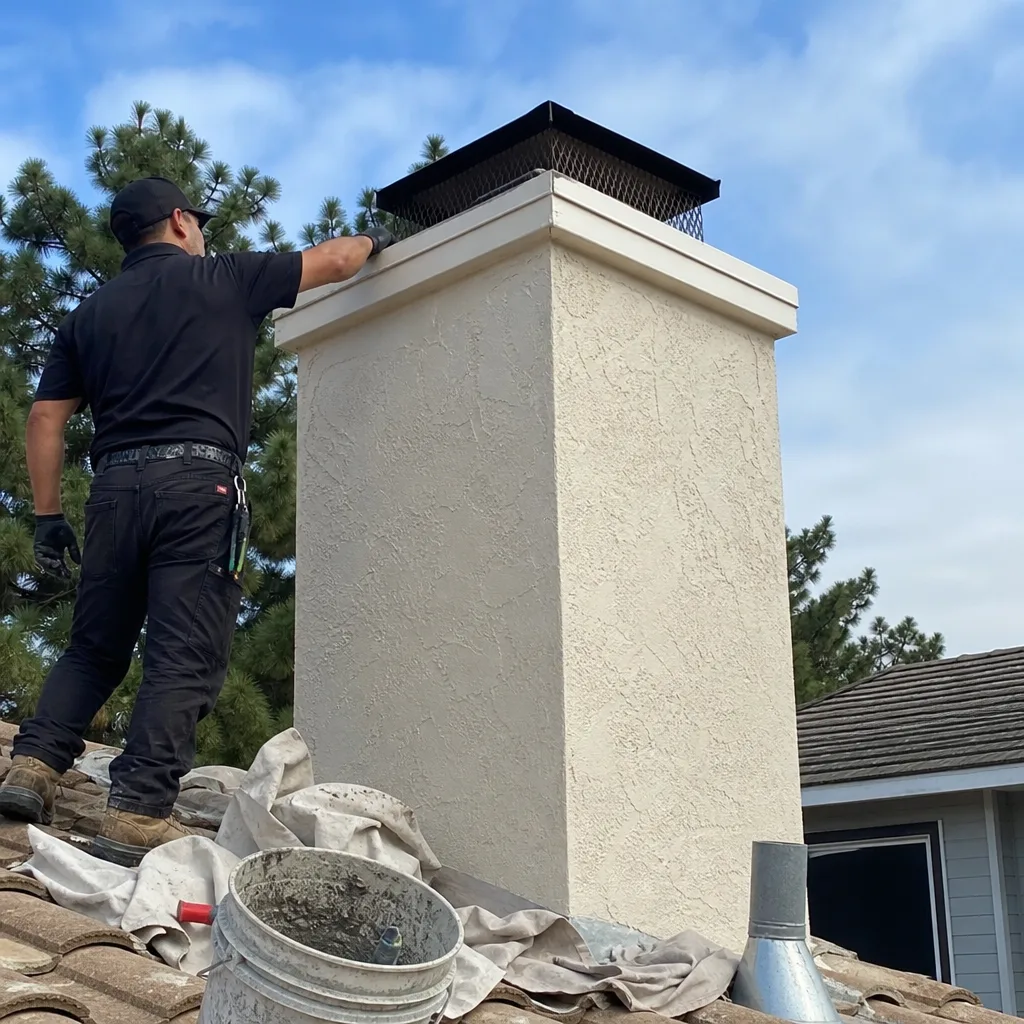 After
After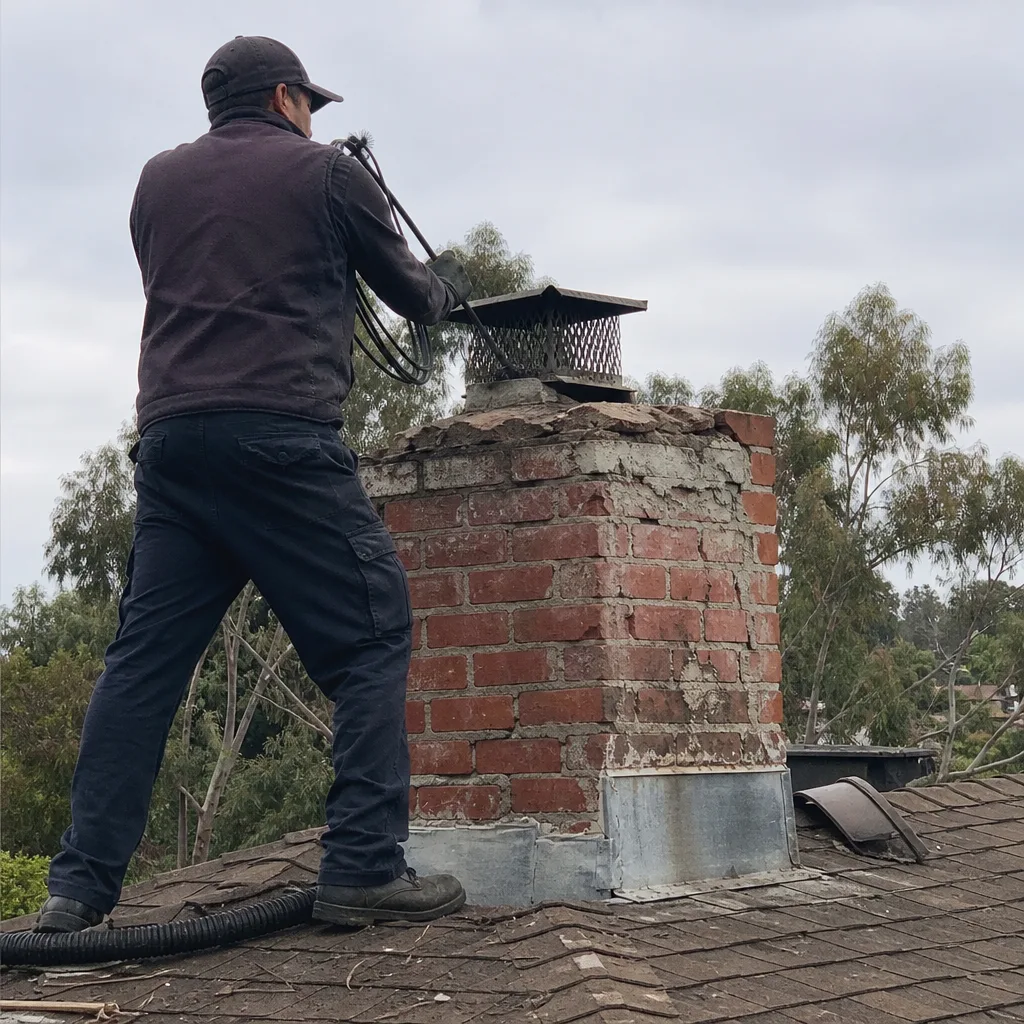 Before
 After
After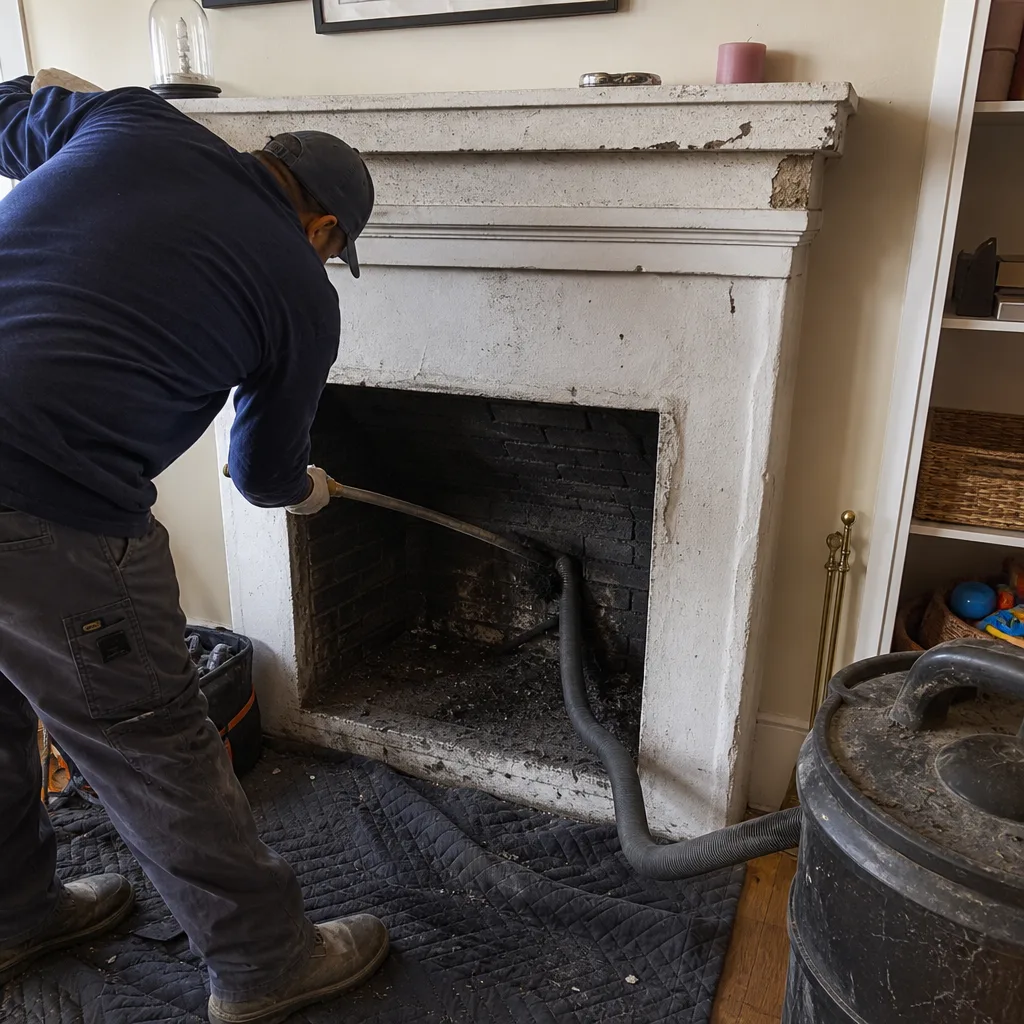 Before
 After
AfterWhen to Call a Professional
Call a chimney professional when you see any of these: visible cracks in the firebox, spalling or crumbling brick on the exterior chimney stack, water staining on the ceiling near the chimney chase, a missing or rusted chimney cap, smoke backing up into the room during use, or creosote buildup thicker than a quarter inch. Also call after any chimney fire, even a small one, and after any significant earthquake. A trained tech with a camera can tell you whether the flue is safe to use or whether you need a permit-pulling repair. Follow our Chimney Sweep Maintenance Checklist for Torrance Homeowners to stay on top of routine care. Hadley Chimney Torrance offers free estimates in Torrance, call (424) 358-3187 and a live person answers, any hour, no voicemail loop.
Frequently Asked Questions
No. Chimney cleaning, sweeping, and creosote removal are maintenance services that don’t alter the chimney structure or venting system, so no permit is required anywhere in California, including Torrance.
Unpermitted chimney repairs become a material disclosure during a home sale in California. You’ll either need to disclose the unpermitted work to the buyer and negotiate that into the price, or complete the work with a proper permit before closing. Both paths cost more than doing the permit correctly the first time.
Per NFPA 211 and us on the ground in Torrance: sweep it at least once per year if you burn wood regularly, and every year regardless of use before the burning season starts. Coastal salt air accelerates metal component corrosion on Torrance chimneys, so an annual inspection catches cap and flashing problems early.
A gas fireplace has a different venting system and different risks, but it still benefits from an annual visual inspection. Gas logs produce less creosote but can develop vent blockages from debris, nests, or corrosion. The clearance and liner requirements are similar, and a cracked venting pipe on a gas fireplace is a carbon monoxide risk.
Yes. The City of Torrance Building and Safety Division runs an online permit portal where you can search by address and see every permit attached to your property. It’s free to search, and you can request copies of specific permits for a small records fee.
A Level 1 inspection covers accessible portions of the chimney and firebox and typically happens during a routine sweep. A Level 2 inspection adds a camera scan of the flue interior, an attic and crawlspace check, and clearance verification against NFPA 211. Level 2 is what mortgage lenders and real estate transactions often require.
Standard sweeps in Torrance run between $200 and $350 depending on flue height, creosote volume, and the condition of the system. For an exact quote on your chimney, call (424) 358-3187 and we’ll give you a written price before any work starts.
The Bottom Line
Chimney cleaning is permit-free in California. Repairs like liner replacement and firebox rebuilds are not. The line between maintenance and construction is clear, and crossing it without the right permit creates a disclosure problem you’ll eventually have to deal with, likely at the worst possible time. Torrance homeowners have a local building department ready to verify permits and a clear path to doing the work correctly. Get the sweep done annually, document the condition with a camera inspection, and if a repair is needed, insist on a permit and a written guarantee. See The Complete Guide to Chimney Cleaning in Torrance for full cleaning guidance. That’s the entire playbook. The rest is details covered above.
Written by Cory Mitchell, Owner at Hadley Chimney Torrance, serving Torrance since 2003.