
Last updated October 15, 2026
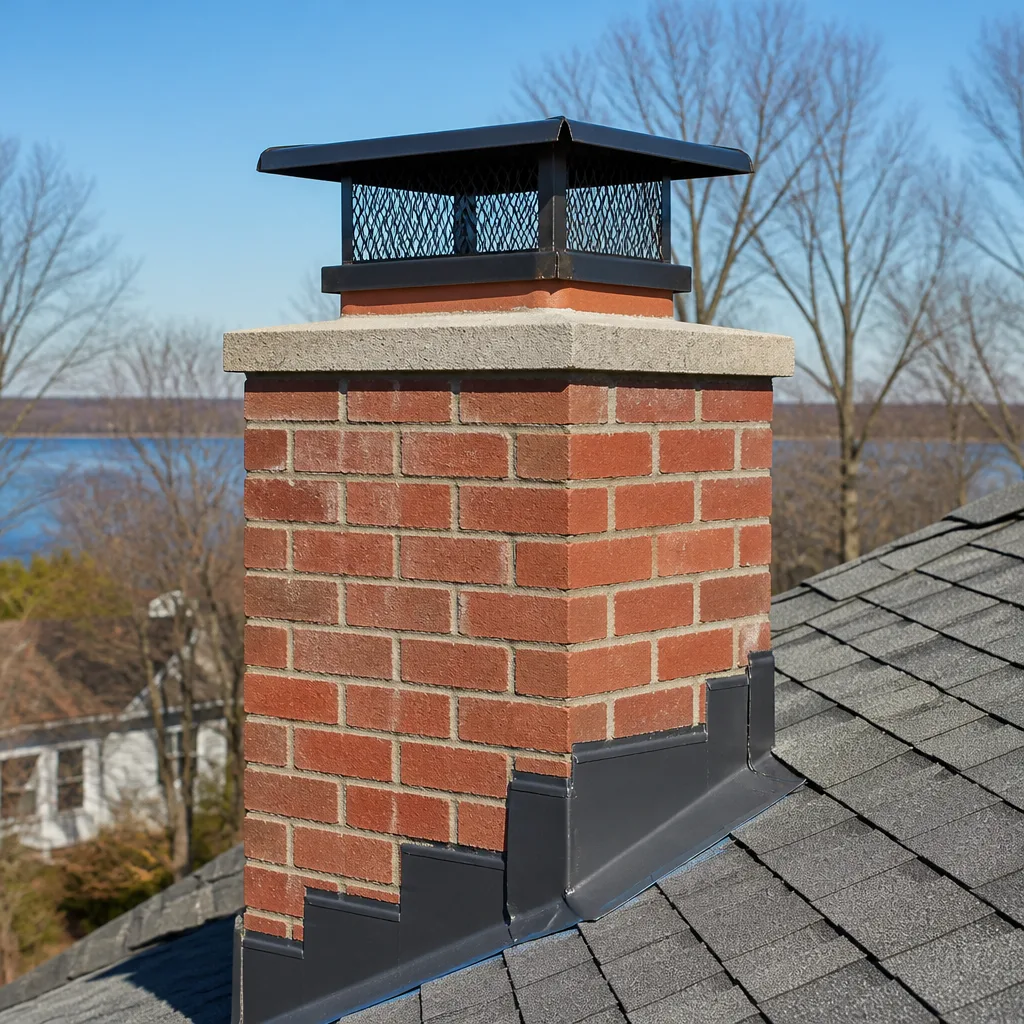 Sweep & inspection
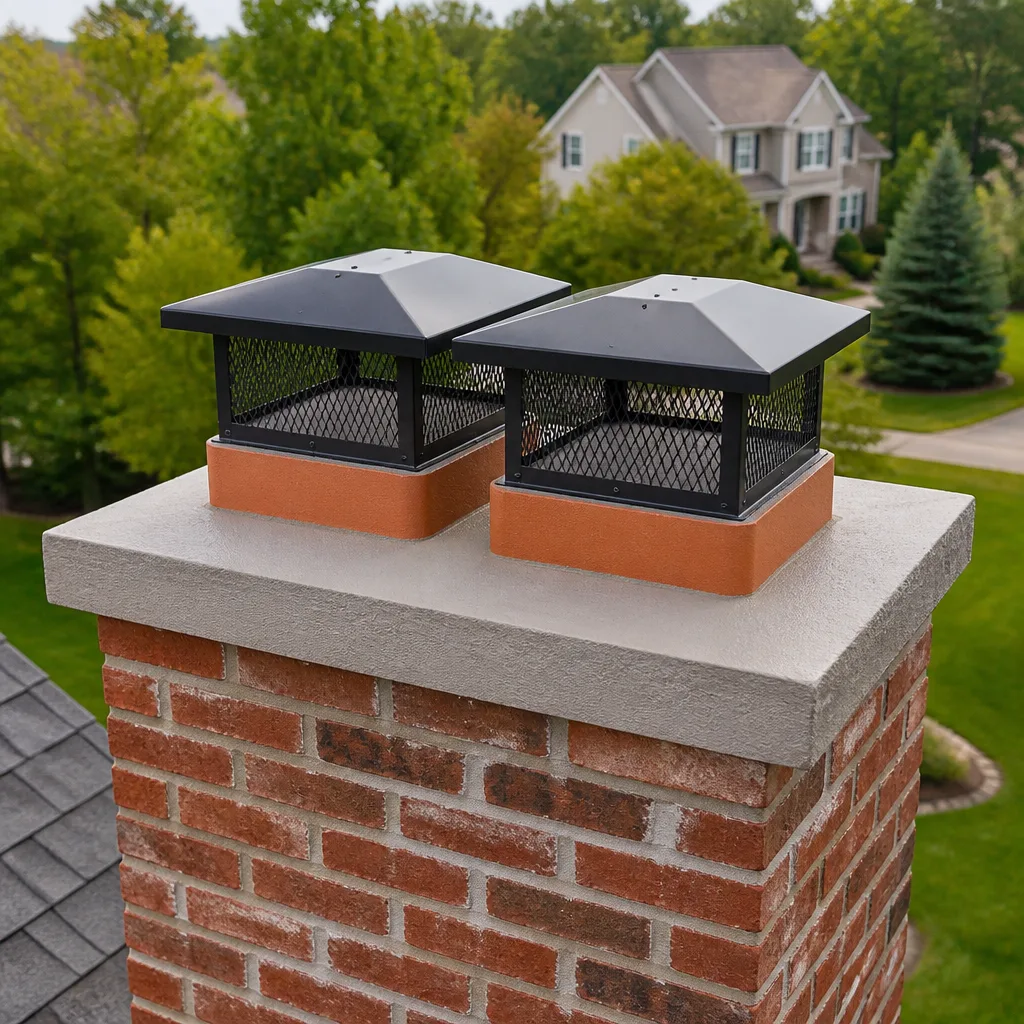 Caps & crowns
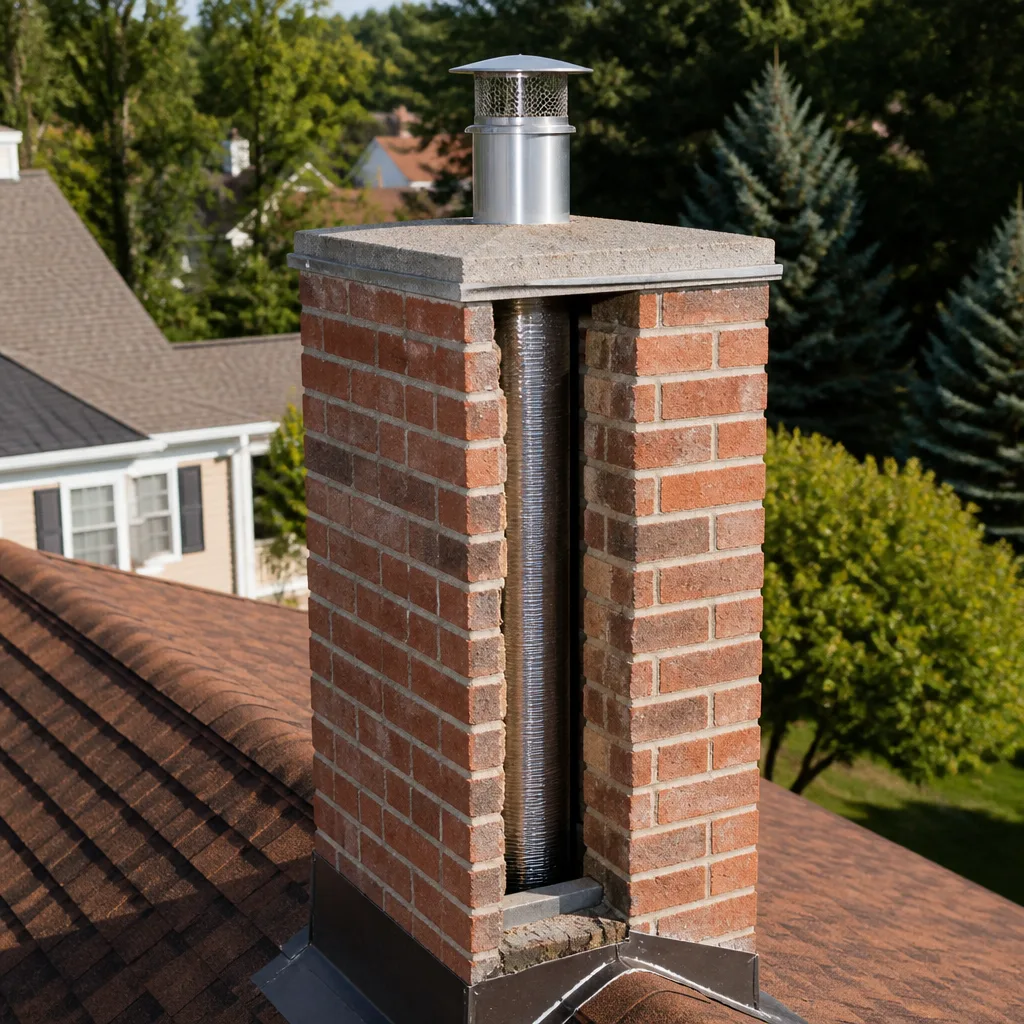 Flue relining
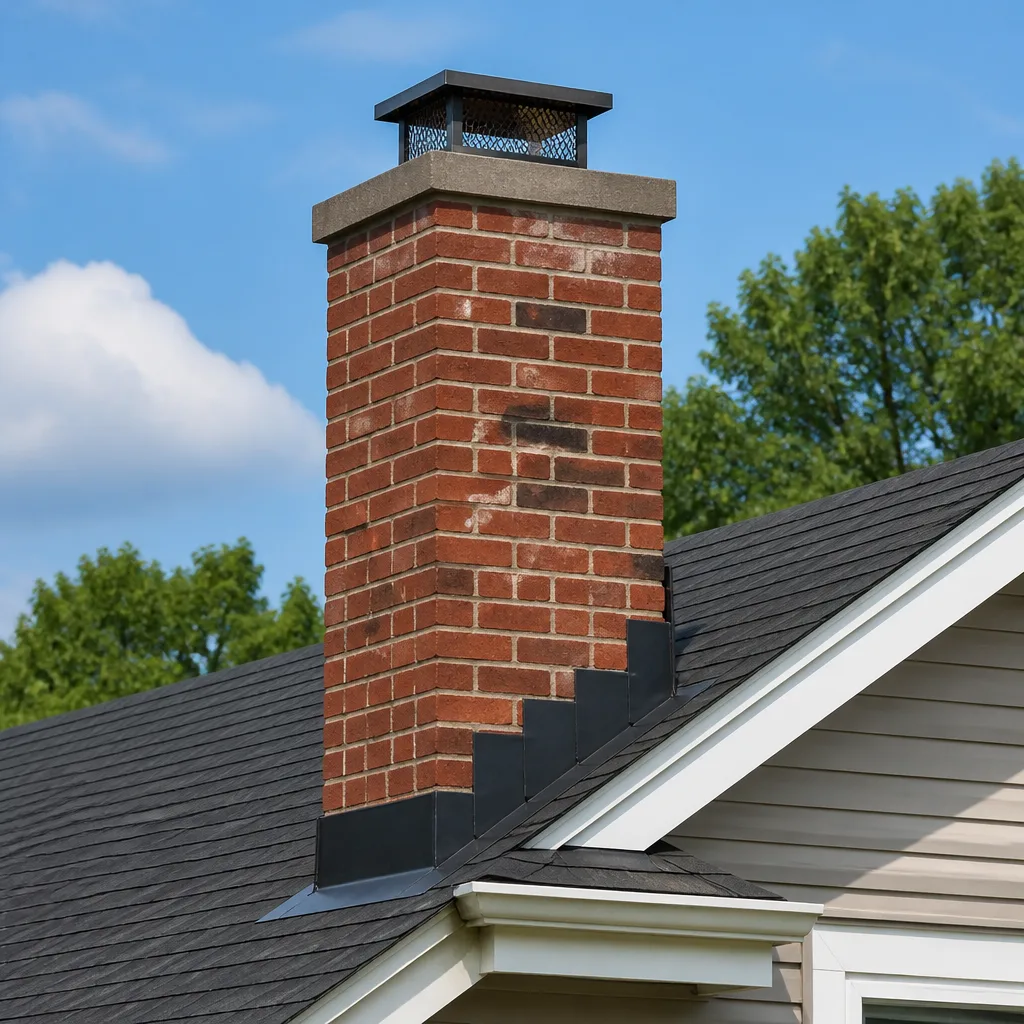 Masonry repair
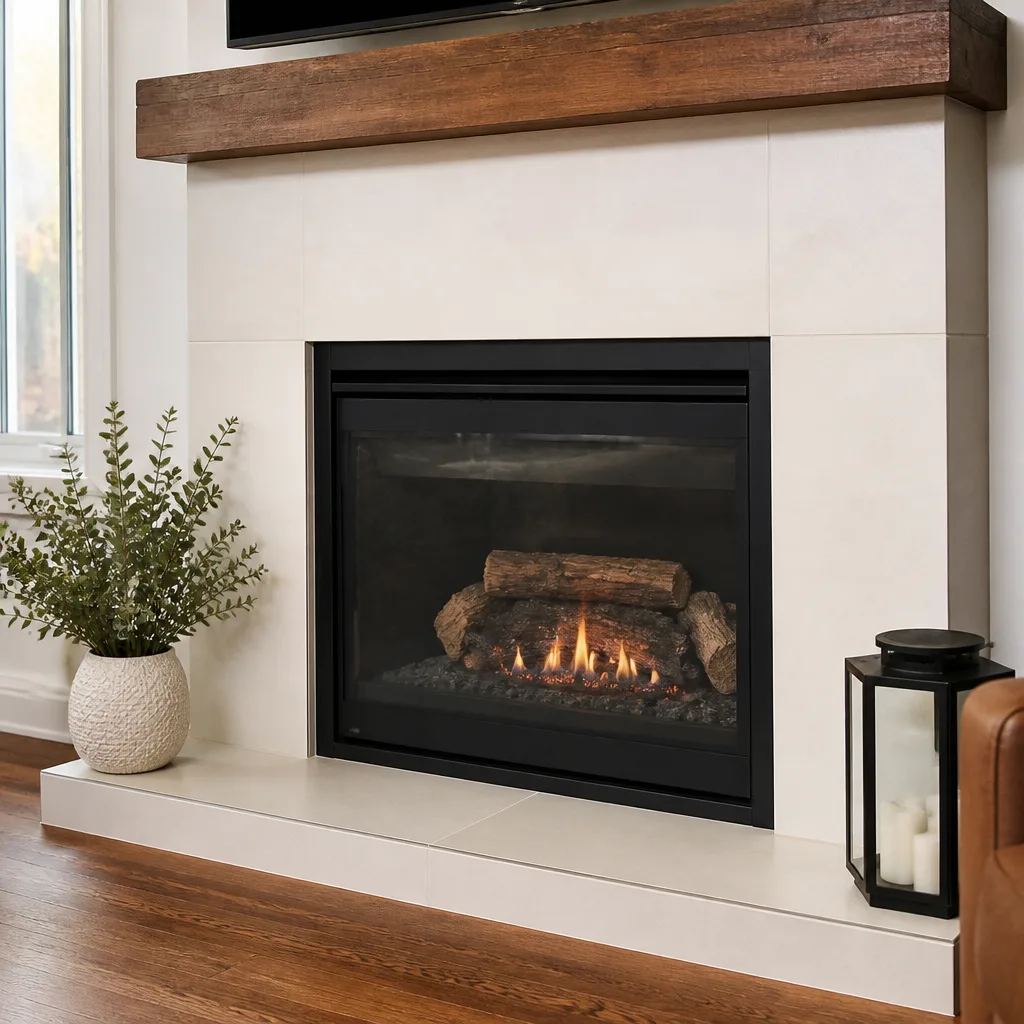 Gas fireplace service
Level 1 sweep and inspection to the NFPA 211 annual standard - flue, crown, cap, and flashing checked and photographed
Chimney sweep logs do not sweep chimneys. They loosen some creosote - which then falls where a brush and vacuum still have to collect it.
DIY vs Professional Chimney Cleaning: The Torrance Homeowner’s Decision Guide
Here’s a stat that surprises most Torrance homeowners: the National Fire Protection Association reports that chimney fires account for roughly 25,000 residential fires annually in the U.S., and nearly all of them trace back to one avoidable cause: creosote buildup that nobody removed in time. You’re reading this because you’ve spotted the $60 brush kits at Home Depot and wondered if you can skip the service call. You can. But what protects your home isn’t the brushing itself. It’s knowing what you’re looking at while you’re up there. This guide walks through both paths honestly, with Torrance-specific costs, access realities, and the inspection judgment that separates a clean chimney from a safe one. For more, see our more guides & resources. By the end, you’ll know exactly which route fits your fireplace, your roof, and your comfort level.
Quick Answer
DIY chimney cleaning in Torrance is realistic for homeowners with a single-story roof, a wood-burning fireplace used occasionally, and the willingness to spend a dusty afternoon learning safe ladder work. It is not realistic for gas fireplace inserts, steep or multi-story roofs, or any chimney that hasn’t had a professional video inspection in the last two years. The cleaning is learnable. The inspection judgment, the part that catches cracked liners and hidden fire risk, is not.
Styles & brands we work with
Table of Contents
- What DIY Chimney Cleaning Actually Involves
- The Inspection Gap: What a Brush Can’t See
- Wood-Burning Fireplaces vs Gas Inserts: Why It Changes Everything
- Insurance, Liability, and the Paper Trail
- What You’ll Spend Either Way: A Cost Breakdown
- A Four-Scenario Decision Matrix
- The Hybrid Approach: DIY Between Professional Inspections
- What Torrance Homeowners Specifically Need to Know
What DIY Chimney Cleaning Actually Involves
Before you buy anything, know what the job really looks like. It’s not spraying a product up the flue. It’s physical work, done from your roof, with the right brush for your flue dimensions, and it generates a fine black dust that will find its way onto anything within ten feet of the fireplace opening.
Here’s the step-by-step reality of a DIY sweep on a typical Torrance wood-burning fireplace:
- Ladder access and roof safety. You need a ladder tall enough to reach your roof safely, plus a second person to foot it. Torrance’s mix of single-story 1950s ranches and two-story Mediterranean-style homes means this step alone eliminates a lot of DIYers. A two-story roofline with Spanish tile is not a beginner-friendly surface. Clay tile cracks under body weight, and walking it safely takes experience.
- Cap removal. Most Torrance chimneys have a spark arrestor cap, required by California building code in wildfire-prone zones. You’ll remove it, which often means dealing with rusted screws or a cap that’s been cemented in place. Some caps are one-piece units that require cutting.
- Brushing the flue. You’ll need a wire or poly brush sized to your flue, typically 6 to 12 inches in diameter, depending on whether you have a round or rectangular clay tile liner. You run it up and down the full length of the flue, adding extension rods as you go. This is tiring and repetitive. Expect 20 to 40 minutes of sustained upper-body work.
- Cleanout and containment. Creosote and soot fall to the bottom of the flue, where they sit in the smoke chamber above the damper. You need a shop vac with a HEPA filter (not your household vacuum, which will blow fine soot through the exhaust) and plastic sheeting taped over the fireplace opening. Even with careful setup, expect some dust escape.
- Inspection while you work. This is the step DIY guides gloss over. As you brush, you should be looking for glazed creosote, spalling brick, cracked flue tiles, and rust. Each of those findings changes what you should do next. If you don’t know what glazed creosote looks like, or what a hairline flue crack means for fire safety, the cleaning has been performed but the risk assessment hasn’t.
- Reassembly and disposal. Cap goes back on, tools come down, shop vac gets emptied carefully. Creosote is a hazardous material in high concentrations. It shouldn’t go into garden beds or regular trash without containment.
The honest assessment: a homeowner with a single-story home, a straightforward flue, and moderate DIY skill can complete this in two to three hours on the first attempt. The brushes and rods cost $60 to $120. The HEPA shop vac, if you don’t own one, adds $80 to $150. It’s not complicated. It’s also not where the risk lives.
What DIY guides don’t tell you is that the brush does one thing: it removes loose creosote from the flue walls. It does not evaluate the condition of the flue liner, the mortar joints between clay tiles, the flashing where the chimney meets the roof, or the firebox refractory panels. Those are the components that fail quietly and expensively.
The Inspection Gap: What a Brush Can’t See
This is the heart of the DIY vs professional debate, and the part most online content skips entirely. A chimney sweep’s value is not the brushing. It’s the trained inspection that happens during the brushing. The brush removes evidence. The inspection reads it.
Here’s what a professional chimney sweep in Torrance evaluates during a standard service that a homeowner physically cannot:
- Video liner scan. A camera run through the flue shows the full interior surface of the clay tile or metal liner. Hairline cracks, misaligned tiles, and gaps in mortar joints are visible on camera and invisible from the roof opening with a flashlight. A cracked flue liner is the single most common reason Torrance chimneys get flagged for repair. It’s also the failure most likely to cause a house fire, because heat and embers escape through cracks into wall cavities or attic framing.
- Flashing and roof-penetration integrity. The point where your chimney exits the roof is the most common leak source in Torrance homes, especially after winter storms. Flashing needs to be evaluated from the roof surface, not from inside the flue. A homeowner can look at flashing but rarely knows what a failing seal looks like versus an aged one. The difference is a $400 repair versus a $9,000 drywall and decking remediation.
- Combustion analysis for gas inserts. Gas fireplaces produce carbon monoxide when the burner is misaligned, the vent is partially blocked, or the air shutter needs adjustment. A combustion analyzer measures CO output at the vent. No homeowner owns one. They cost $300 to $800. Yet this is the test that actually determines whether your gas fireplace is safe to run.
- Creosote stage classification. Creosote comes in three stages. Stage one is flaky and brushes off easily. Stage two is tar-like and requires chemical treatment or rotary tools. Stage three is glazed, hardened, and highly flammable, requiring professional removal. Identifying the stage determines whether a DIY brush job was sufficient or cosmetic. Most homeowners can’t tell stage two from stage three, and treating stage three as stage one is how chimney fires happen.
- Flue-sizing and draft evaluation. A flue that’s oversized for the fireplace produces weak draft, which means smoke rolls into the room instead of up the chimney. A flue that’s undersized creates backdraft risk. Draft is measurable with a simple tool, but interpreting the reading against the fireplace’s BTU output and the home’s air pressure is not intuitive. Torrance’s coastal marine layer adds another variable: on low-pressure overcast days, chimneys that draft fine in dry Santa Ana conditions will smoke back into living rooms.
None of this is fear-mongering. It’s the reality of what a $200 to $450 professional sweep includes beyond the brushing. The brushing is the labor. The inspection is the service. In our experience at Hadley Chimney Torrance, roughly one in four chimneys we sweep reveals an issue the homeowner didn’t know about. Most are minor. Some are not. The Hadley Chimney Torrance home service philosophy is built on this: we photograph every finding and send it to you, so you never have to take our word for a repair recommendation.
Wood-Burning Fireplaces vs Gas Inserts: Why It Changes Everything
The DIY conversation shifts dramatically depending on what’s in your firebox. If you own a traditional masonry wood-burning fireplace, DIY cleaning is genuinely viable for a careful homeowner. If you own a gas fireplace insert or a factory-built gas fireplace, it’s not. Here’s why.
Wood-Burning Fireplaces: DIY-Friendly with Caveats
A traditional Torrance wood-burning fireplace is a simple system: firebox, damper, smoke chamber, clay tile flue. The cleaning is mechanical. You brush the flue, remove the creosote, empty the firebox. The access is straightforward. The risks are roof access and proper creosote assessment. If you have a single-story home, a reasonably safe roof, and you burn fewer than a dozen fires per year with seasoned hardwoods, a homeowner who studies the process can do an acceptable job.
The caveat is creosote type. Softwood burning, which is common in Torrance because of the availability of pine and eucalyptus, produces higher resin content and faster creosote accumulation. Eucalyptus, in particular, burns hot and fast but leaves behind a sticky creosote that hardens quickly. If you’ve been burning unseasoned wood in a Torrance fireplace for a full winter season, you may have stage-two creosote, which a basic wire brush won’t remove.
Gas Inserts and Gas Fireplaces: Not DIY Territory
Gas fireplace inserts are sealed combustion systems. They have burners, thermocouples, pilot assemblies, ceramic logs positioned for specific flame patterns, and venting that’s often coaxial. The cleaning involves disassembling the log set, cleaning the burner ports without damaging them, and checking the venting for blockages. A small mistake in reassembly produces incomplete combustion, which produces carbon monoxide. This is not a “watch a YouTube video and figure it out” scenario. This is a “call someone who works on gas appliances” scenario.
There’s a second issue specific to gas fireplaces: the chimney above a gas insert often doesn’t get cleaned for years because homeowners assume gas means clean. That’s partially true. Gas produces no creosote. But gas fireplaces vent through existing masonry chimneys in many Torrance homes, and those chimneys can still have old creosote from previous wood burning, or degraded clay tile liners, or bird nests. A gas insert doesn’t eliminate the inspection need. It changes the inspection type. A professional gas fireplace repair in Torrance typically includes combustion analysis alongside the cleaning, and that’s a piece of equipment no homeowner owns.
Insurance, Liability, and the Paper Trail
Here’s the angle almost no one discusses: your homeowners insurance policy may have something to say about who cleans your chimney.
Most California homeowners insurance policies cover chimney fires under the fire peril. But claims adjusters routinely ask for maintenance records after a chimney fire. If you cleaned the chimney yourself, you have no documentation. No service receipt. No inspection report. No third-party record that the chimney was maintained at all. That doesn’t mean your claim gets denied automatically. But it does mean you’re in a weaker position when the adjuster asks, “When was the last time a qualified professional inspected this chimney?”
Here’s what a professional sweep provides that DIY cannot:
- A written inspection report documenting the flue condition on a specific date. Hadley Chimney Torrance includes before-and-after photos of the entire job as part of The Relay Visibility Guarantee, so you have visual proof of the work, not just a receipt.
- A repair trail. If a sweep identifies a cracked liner and you choose not to repair it, that’s documented. If you DIY clean and the cracked liner goes unobserved, there’s no record anyone ever looked. The distinction matters in a claim.
- Manufacturer alignment for gas inserts. Many gas fireplace manufacturers state in their warranty language that annual professional service is required to maintain warranty coverage. DIY cleaning voids that warranty in some cases. It’s worth checking your insert’s manual before deciding.
- Liability transfer. If a professional identifies a problem and you decline the repair, the liability for what happens next shifts toward the homeowner who declined. If a homeowner misses the problem entirely through DIY cleaning, there’s no shift because there was no identification. You own the full consequence of your oversight.
The insurance angle isn’t an argument against DIY in every case. It’s an argument for professional documentation on a regular interval. A homeowner who DIY-brushes between professional inspections every other year has both: the savings of doing some work themselves and the paper trail of an expert’s eyes on the system periodically.
What You’ll Spend Either Way: A Cost Breakdown
Cost is usually where the DIY conversation starts. Let’s run the actual numbers for Torrance in 2025, because prices here run higher than national averages due to coastal market rates. See our Chimney Cleaning Cost Breakdown: The Torrance Homeowner’s Reference for 2026 for full pricing details.
DIY First-Year Costs
| Item | Typical Cost | Notes |
|---|---|---|
| Chimney brush kit with rods | $60 to $120 | Must be sized to your flue; getting the wrong size wastes the purchase |
| HEPA-filtered shop vac | $80 to $150 | Standard shop vacs blow fine soot through the exhaust |
| Plastic sheeting, painter’s tape, drop cloths | $15 to $30 | Containment is not optional |
| Safety glasses, N95 mask, work gloves | $25 to $50 | You’ll want these regardless of job type |
| Ladder rental (if needed) | $40 to $80 per day | Most Torrance single-story homes need a 20- to 24-foot ladder |
| Total first year | $220 to $430 | Most of this is reusable |
Professional Sweep: Torrance Market
| Service | Typical Range | What It Includes |
|---|---|---|
| Standard chimney sweep | $180 to $350 | Full brushing, cap check, firebox cleaning, basic visual inspection |
| Sweep with video inspection | $275 to $450 | Everything above plus a camera scan of the flue with photo documentation |
| Gas fireplace service and cleaning | $150 to $300 | Burner cleaning, pilot check, combustion analysis, glass cleaning |
| Chimney repair (cracked liner, flashing, tuckpointing) | $400 to $4,000+ | Varies widely by scope; liner repairs typically run $1,200 to $3,500 |
The math favors DIY in year one if you need to buy everything and own a straightforward single-story chimney. By year three, if you’ve had no issues, DIY has clearly paid for itself. But the cost comparison only holds if your chimney needed nothing more than brushing. A cracked liner that goes unnoticed during three years of DIY cleaning costs $3,000 to fix when it’s finally caught, and the damage it prevents could have cost far more. That’s the hidden variable in the DIY equation.
Hadley Chimney Torrance provides a written price before any work starts on every job, including sweeps. That means you’ll know the exact cost before the technician touches a brush. No surprises at the door. It’s one of the ways we handle the transparency gap that makes homeowners nervous about calling a chimney company in the first place.
A Four-Scenario Decision Matrix
Here’s the clear version. Four scenarios where DIY makes sense. Four where it doesn’t.
DIY Makes Sense When:
- Single-story home with a walkable roof. You can access the chimney without a steep pitch, clay tile that cracks underfoot, or a two-story ladder climb. This is the biggest practical barrier and the one most Torrance homeowners can’t clear.
- Wood-burning fireplace used fewer than 12 times per year. Light usage means light creosote accumulation. A stage-one creosote is brushable by a homeowner. If you’re an occasional fire user in Torrance’s mild coastal climate, your flue probably doesn’t build enough glaze to require professional tools.
- Professional inspection within the last 24 months. You’re not flying blind. A technician has already camera-scanned the liner, cleared the system, and given you a written report. Your DIY brushing is maintenance between checks, not a substitute for ever having an expert look.
- Comfortable with ladder work and realistic about dust. Some people should not be on roofs. That’s not a character flaw. It’s a reasonable risk assessment. If heights make you nervous or your roof is Spanish tile that a contractor has told you to avoid walking on, that’s your answer.
DIY Does NOT Make Sense When:
- Gas fireplace insert or gas fireplace. The risk is carbon monoxide, not creosote. Combustion analysis requires equipment you don’t own. The stakes are invisible and potentially fatal. This is not negotiable.
- Two-story home or steep roof pitch. The leading cause of DIY chimney cleaning injuries is ladder falls, not creosote exposure. Torrance has plenty of two-story homes in the Southwood and Seaside areas, many with tile roofs that are genuinely hazardous to walk.
- Visible glazed creosote or a history of chimney issues. If you look up the flue and see shiny black accumulation that looks like a glaze, that’s stage-two or stage-three creosote. A wire brush won’t remove it properly, and attempting to do so gives false confidence. A chimney repair in Torrance company can assess whether chemical treatment or mechanical removal is needed.
- No professional inspection on record. First time cleaning the chimney since you bought the house? Don’t start with DIY. Start with a professional inspection so you know the system’s baseline condition. Then decide whether future DIY maintenance is appropriate.
The Hybrid Approach: DIY Between Professional Inspections
The most practical path for many Torrance homeowners is neither full DIY nor full professional service. It’s a hybrid: professional inspection with cleaning every other year, DIY brushing in the off years.
Here’s how it works in practice:
- Year one: Book a professional sweep with video inspection. Get the written report and photos. Confirm the liner is sound, the flashing is intact, and the creosote level is manageable. This establishes your baseline. Hadley Chimney Torrance includes this documentation on every job as part of The Relay Visibility Guarantee, so you’ll have before-and-after photos in hand.
- Year two: If your usage is light and the year-one report showed no issues, DIY brush the flue. Use the same brush the technician sized for your flue. You’re maintaining, not diagnosing.
- Year three: Book another professional sweep with inspection. This catches anything that changed in two years and gives you fresh eyes on the liner, flashing, and cap. If this report is clean, you do another DIY year.
- Repeat. The professional visit every other year keeps documentation current for insurance purposes, maintains manufacturer warranty requirements on any gas components, and gives you a professional’s eyes at regular intervals.
This approach costs roughly $200 to $350 every two years for the professional visit, plus the one-time DIY tool investment. Spread over time, it’s the cheapest safe strategy. It also avoids the trap of a homeowner who DIYs for five years with no professional input, builds false confidence, and discovers a cracked liner only after visible damage appears inside the home.
One note: if your professional inspection identifies any issue that needs monitoring, the hybrid approach shifts. Don’t DIY between visits when a known issue is being watched. Let a professional track it.
What Torrance Homeowners Specifically Need to Know
Torrance has a few local factors that change the chimney maintenance calculus compared to other parts of Los Angeles County.
Coastal air means faster exterior deterioration. Torrance sits close enough to the Pacific that salt air accelerates rust on chimney caps and flashing. Homes in the Hollywood Riviera and the Avenues neighborhoods, which sit higher and get more direct marine layer exposure, see cap and flashing corrosion faster than inland homes. A corroded cap lets rain in, and rain plus creosote creates an acidic slurry that degrades clay tile liners. If your home is within a mile and a half of the coast, you should budget for cap and flashing checks more often than the national “inspect annually” guidance suggests. Our Seasonal Chimney Cleaning Care for Torrance: Year-Round Homeowner’s Guide covers how to time these checks.
Spanish tile roofs are three times more expensive to walk wrong. Many Torrance homes, especially in the Southwood and Hickory Park areas, have Spanish clay tile. A professional chimney sweep in Torrance knows how to move across tile without cracking it. A homeowner learning on the spot does not. Cracked tile replacement runs $15 to $40 per tile in materials alone, and if the underlayment is damaged, you’re looking at a roofing repair, not a chimney repair.
Santa Ana winds change draft behavior. During Santa Ana events in fall and early winter, Torrance fireplaces can behave strangely. Wind blowing across the top of a chimney creates negative pressure that can cause smoke to pull back into the room. A chimney that drafts perfectly on a normal day may smoke back during a Santa Ana. If you’ve DIY-cleaned and still have smoke issues, the problem may be a draft issue, not cleanliness. That’s a diagnostic question, not a brushing question.
Eucalyptus burning is common and creosote-heavy. Torrance has significant stands of eucalyptus, and many homeowners burn eucalyptus rounds because they’re available and aromatic. Eucalyptus burns hot, which is fine, but it leaves a sticky creosote that hardens into a glaze faster than oak or almond. If you burn eucalyptus regularly, you may need professional cleaning more often than the standard once-a-year recommendation, and DIY brushing may not cut through what’s left behind.
Permit reality for chimney work. Most standard chimney sweeping requires no permit in Torrance. But structural repairs, liner replacement, or major rebuilds do require a building permit through the City of Torrance’s Building and Safety Division. A legitimate chimney company will tell you when a permit is needed and handle that process. A DIYer doing liner repair without a permit is creating a code violation that will surface at resale.
Common Mistakes to Avoid
- Using a chimney cleaning log and calling it done. Creosote sweeping logs (the ones you burn in the fireplace) can loosen some stage-one creosote, but they do not replace brushing or inspection. Homeowners who burn a log and skip the brush are deferring the problem, not solving it.
- Purchasing a brush without measuring the flue first. Flues come in specific sizes, and a brush that’s too small will miss the walls while one that’s too large will jam. Measure the flue dimensions before buying anything, or buy adjustable kits marketed for your fireplace type.
- Cleaning a gas fireplace from the top down. Gas fireplaces are cleaned from the firebox up, not from the roof down. The burners, pilot assembly, and logs all need disassembly and careful cleaning, and none of that happens from the roof. Wood fireplace technique does not transfer.
- Ignoring the smoke chamber. Most DIYers brush the flue and clean the firebox but skip the smoke chamber, the angled section directly above the damper. It’s harder to reach, but it collects creosote just like the flue. A hidden creosote pocket in the smoke chamber is a fire waiting for the right conditions.
- Assuming “gas means no maintenance.” Gas fireplaces may not produce creosote, but they still require cleaning, burner checks, and combustion analysis. A gas insert that’s never been cleaned will burn dirty, produce CO, and eventually fail. The failure is quiet until it’s not.
- Waiting until October to book a sweep. Torrance’s peak chimney season starts in late September and runs through January. The professional companies book out weeks in advance during that window. If you want a sweep before you actually need the fireplace, book in August or September. If you miss the window, you’ll still be able to book, but you may wait two to three weeks for an appointment.
- Cleaning a chimney you’ve never had inspected. This is the recurring mistake. If you don’t know the system’s baseline condition, your first move should be a professional inspection, not a DIY brush job. Cleaning without knowing what you’re cleaning is maintenance theater.
See the difference
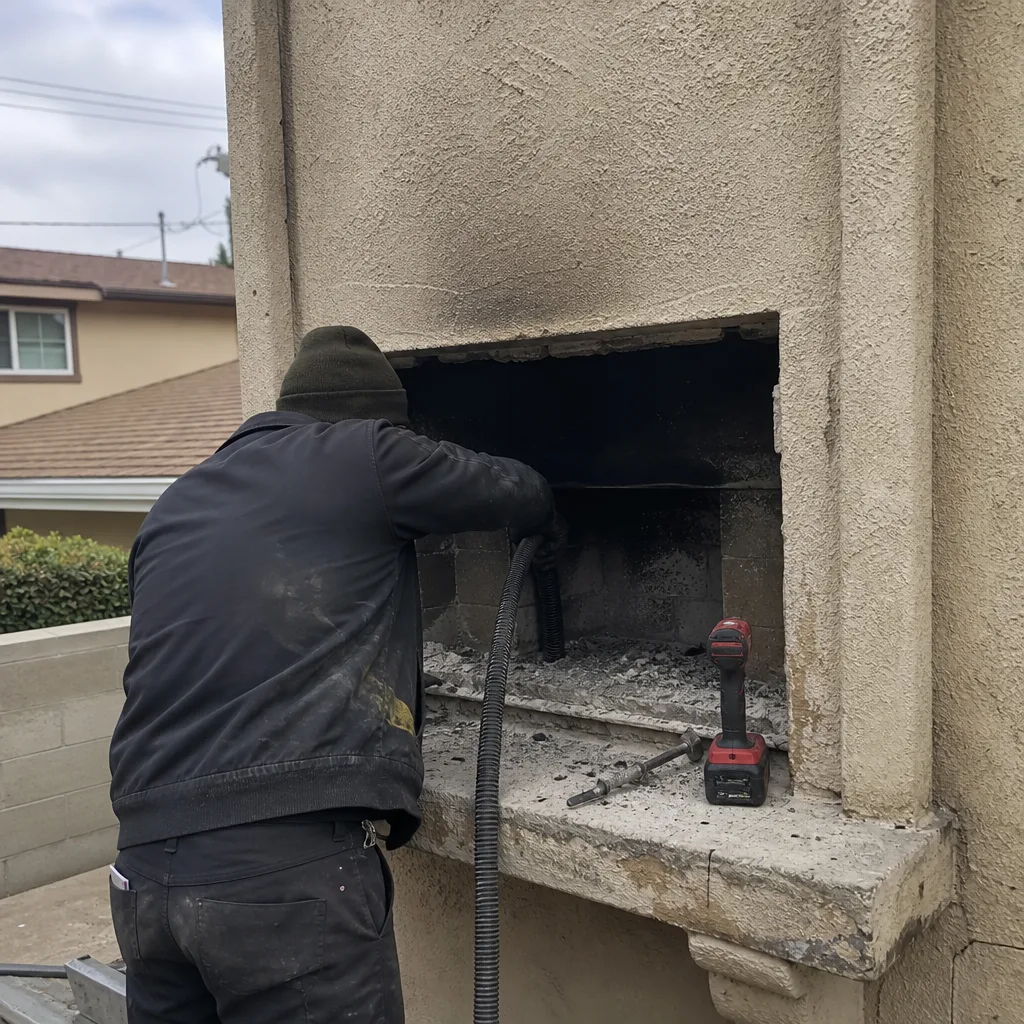 Before
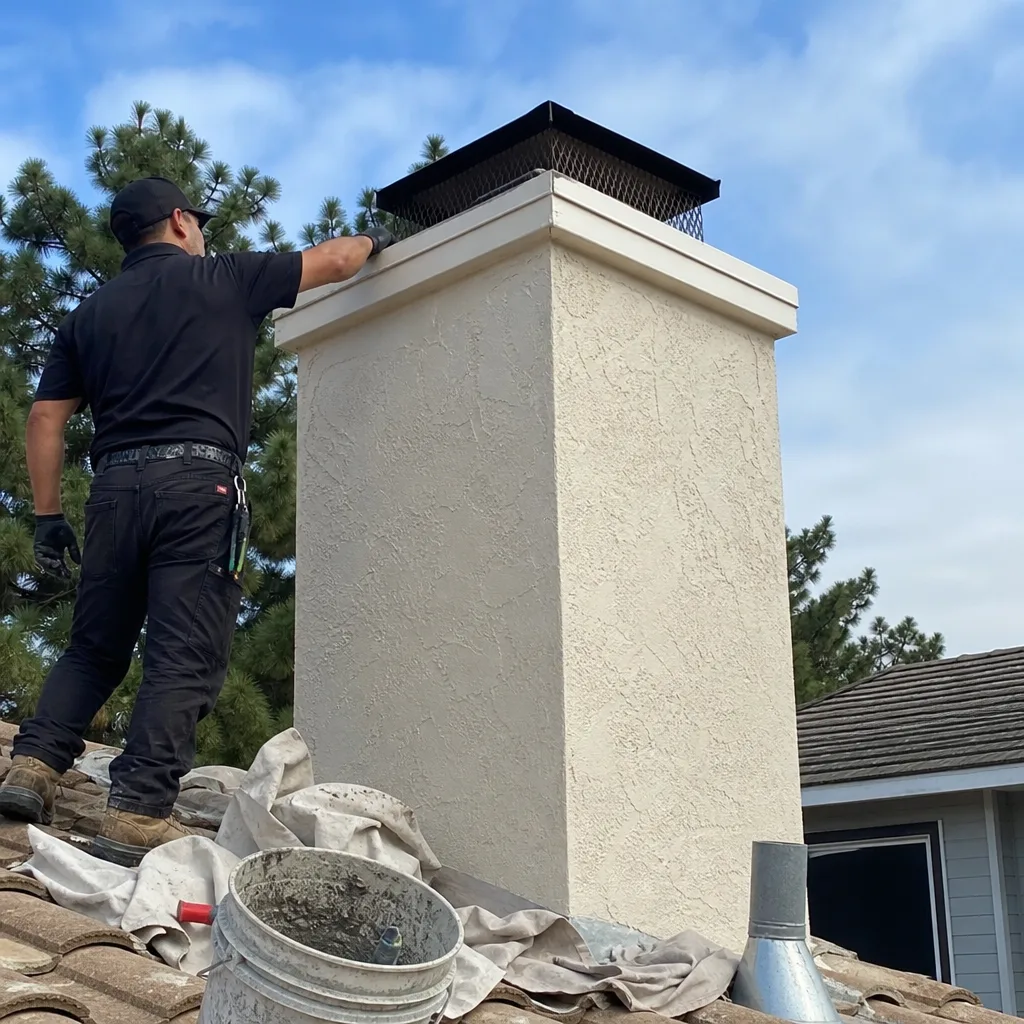 After
After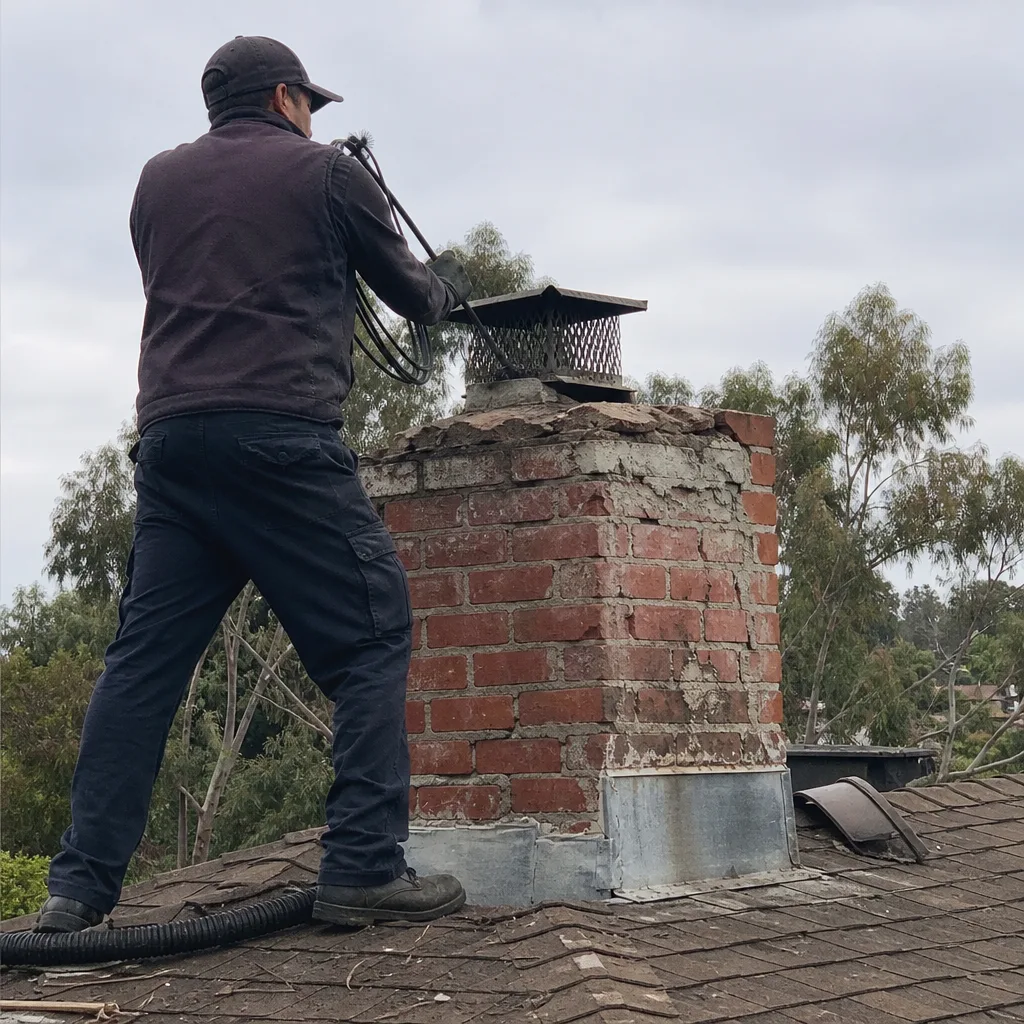 Before
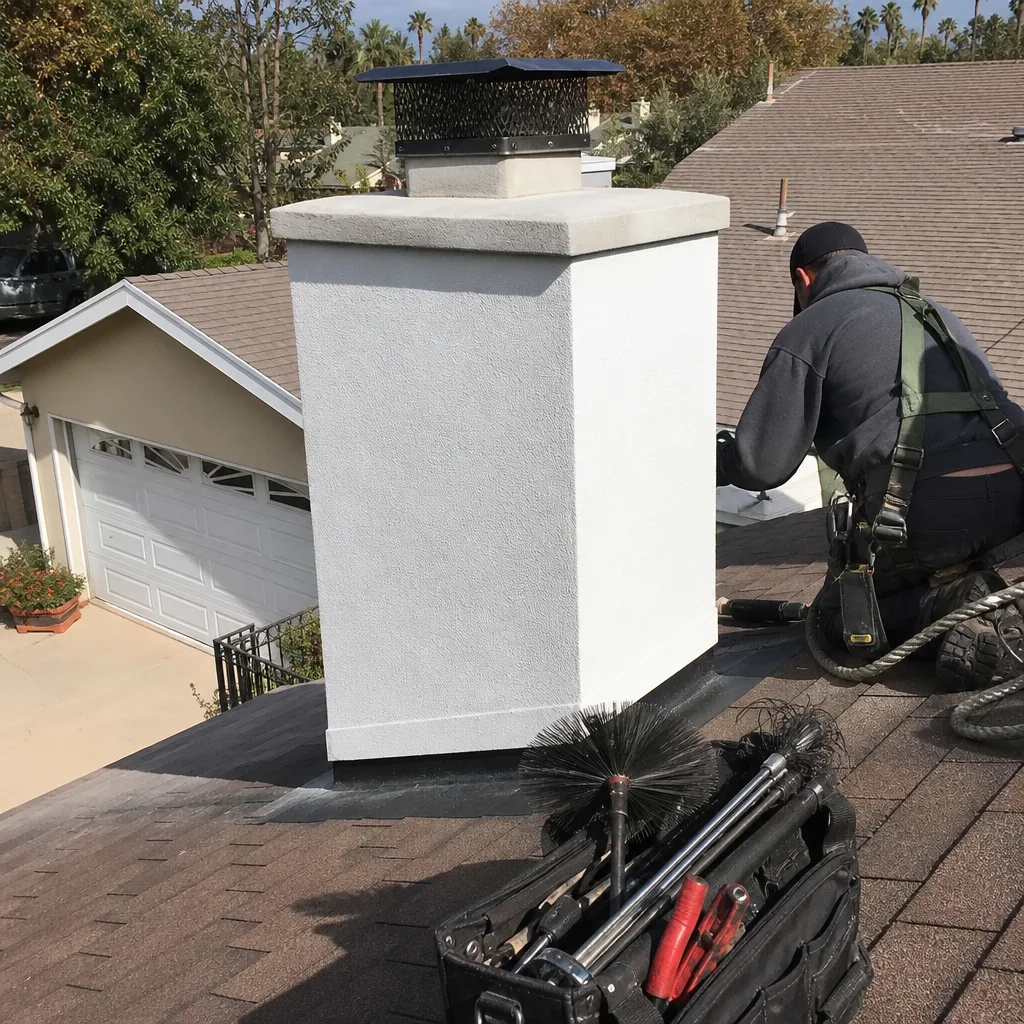 After
After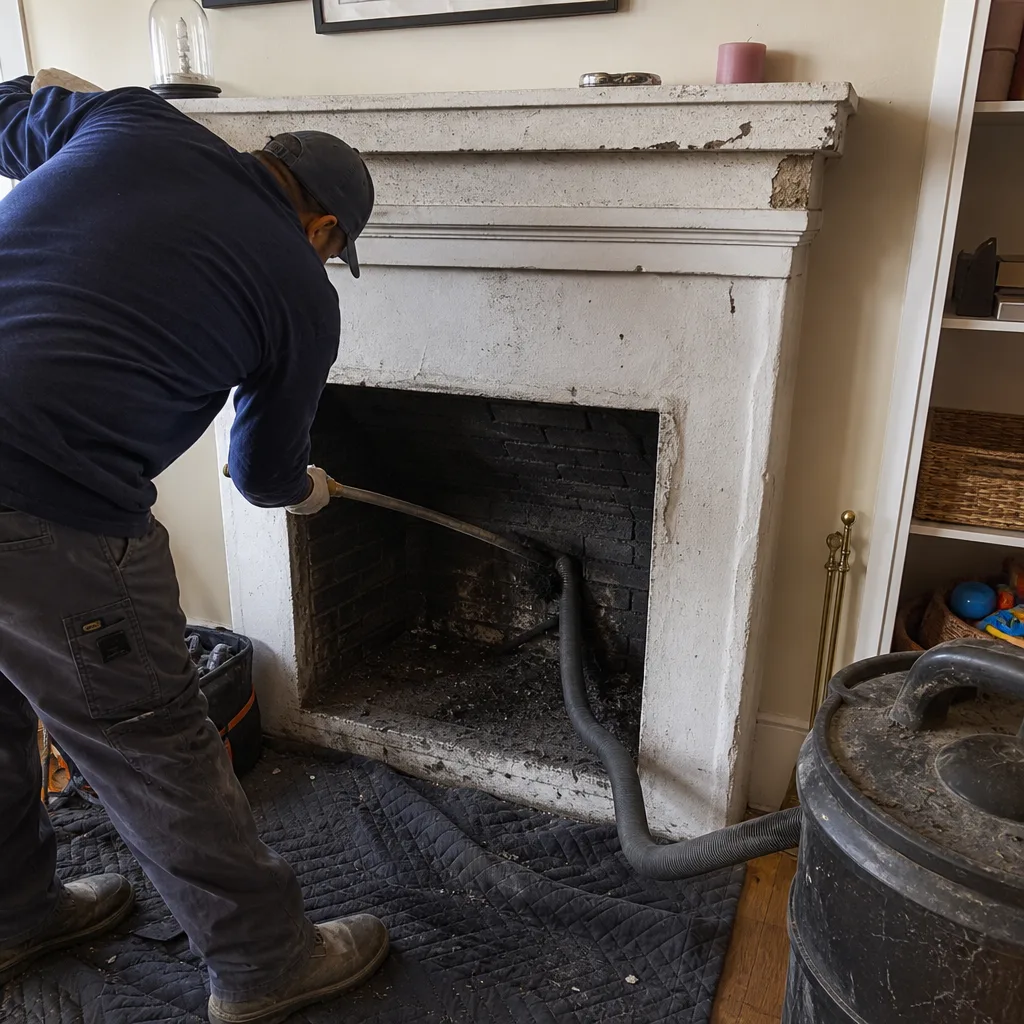 Before
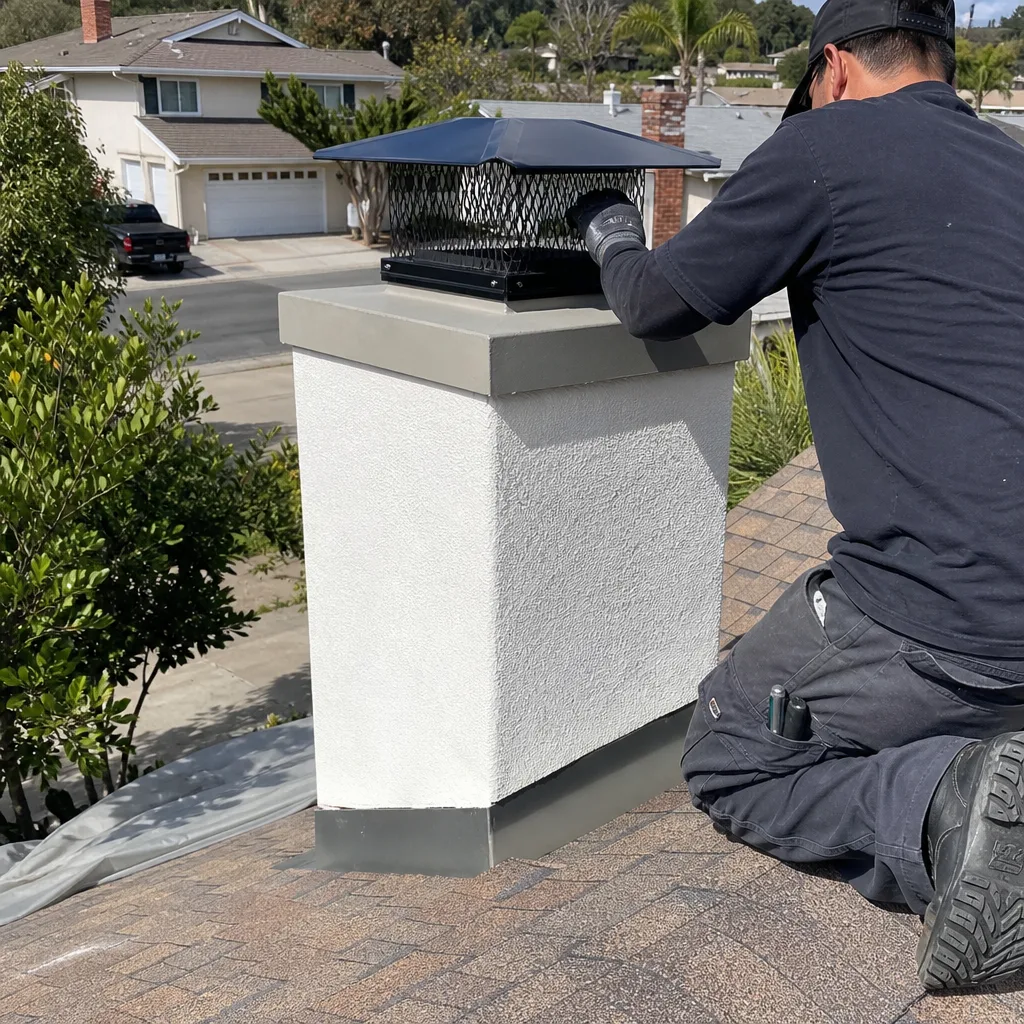 After
AfterWhen to Call a Professional
You should call a professional if any of the following apply: you own a gas fireplace or gas insert; your home is two stories or has a tile roof; you see glazed black buildup inside the flue; you smell smoke inside the house after fires; your chimney hasn’t been professionally inspected in the last two years; or you’ve noticed rust on the chimney cap or water staining near the roofline. These are all situations where the inspection matters more than the cleaning, and that’s where professional equipment and training earn their cost. Not sure how to choose a pro? Read How to Hire a Chimney Cleaning Contractor in Torrance: A Step-by-Step Guide. Hadley Chimney Torrance offers free estimates across Torrance. We show up at a tracked arrival time, do the work, and send you photos of everything we find. Call (424) 358-3187 to get a written price before any work starts.
Frequently Asked Questions
A standard chimney sweep in Torrance typically costs $180 to $350, with video inspection adding another $95 to $150. Gas fireplace service runs $150 to $300. These are Torrance market rates, which run slightly higher than national averages due to coastal Southern California pricing. Every Hadley Chimney Torrance job includes a written price before work begins, so you’ll always know your exact cost before the technician starts. Call (424) 358-3187 for a free estimate.
Yes, you need an inspection even with light usage, though you can probably stretch the interval. Even infrequent burning produces creosote, and the bigger issue for light-use fireplaces is what you don’t see: animal nests, rusted caps, cracked liners, and water intrusion that happen whether or not you burn. A light-use fireplace should still have professional eyes on it every two years at minimum. Between those visits, DIY brushing is a reasonable maintenance approach.
The National Fire Protection Association recommends chimney inspection and sweeping whenever creosote reaches one-eighth inch thickness, which in practical terms means annually for regular-use fireplaces and every two years for occasional-use fireplaces. Gas fireplaces should be serviced annually regardless of how often they’re used, because the concern is carbon monoxide and burner function rather than creosote. If you burn eucalyptus or other resin-heavy woods common in Torrance, you may need more frequent cleaning.
No. Gas fireplace cleaning requires disassembling the log set, cleaning burner ports without damaging them, checking the pilot assembly, and running combustion analysis to confirm safe CO levels. The combustion analyzer alone costs $300 to $800, and using it correctly takes training. More importantly, the consequence of getting it wrong is carbon monoxide in your home, which is odorless and potentially fatal. This is a job for a professional gas fireplace repair in Torrance technician.
Creosote accumulates, hardens into a glaze, and becomes fuel for a chimney fire. The fire may be contained within the flue, or it may escape through cracks in the liner and reach your attic framing. Even without a fire, a neglected chimney develops water intrusion, which degrades the liner and masonry over time, making eventual repairs more expensive. The realistic cost of neglect isn’t just the fire risk; it’s a $3,000 to $5,000 liner replacement that could have been caught as a $400 repair years earlier. Call (424) 358-3187 to schedule a professional inspection before it reaches that point.
Homeowners insurance typically covers chimney fires as a fire peril, but a claim after a chimney fire will almost certainly prompt a documentation request from the adjuster. If you have no professional inspection records and have been DIY cleaning, you’re in a weaker position to demonstrate that the chimney was properly maintained. Professional inspection reports create a paper trail that supports your claim. The safest approach is a hybrid one: professional inspection every other year with documented findings, and DIY brushing between those visits if your system’s condition supports it.
The Bottom Line
DIY chimney cleaning in Torrance is not a yes-or-no question. It’s a judgment call that depends on your roof type, fireplace type, usage patterns, and history of professional inspections. For a homeowner with a single-story home, a wood-burning fireplace, light usage, and a recent clean inspection report, DIY brushing is a rational way to save $200 to $350 per year. For everyone else, and especially for gas fireplace owners, two-story homes, and chimneys with unknown histories, the professional route isn’t an upsell. It’s the only route that actually evaluates the system you’re cleaning. The brush removes creosote. The trained eye catches what’s about to fail. One of those two things is worth paying for.
Written by Cory Mitchell, Owner at Hadley Chimney Torrance, serving Torrance since 2003.